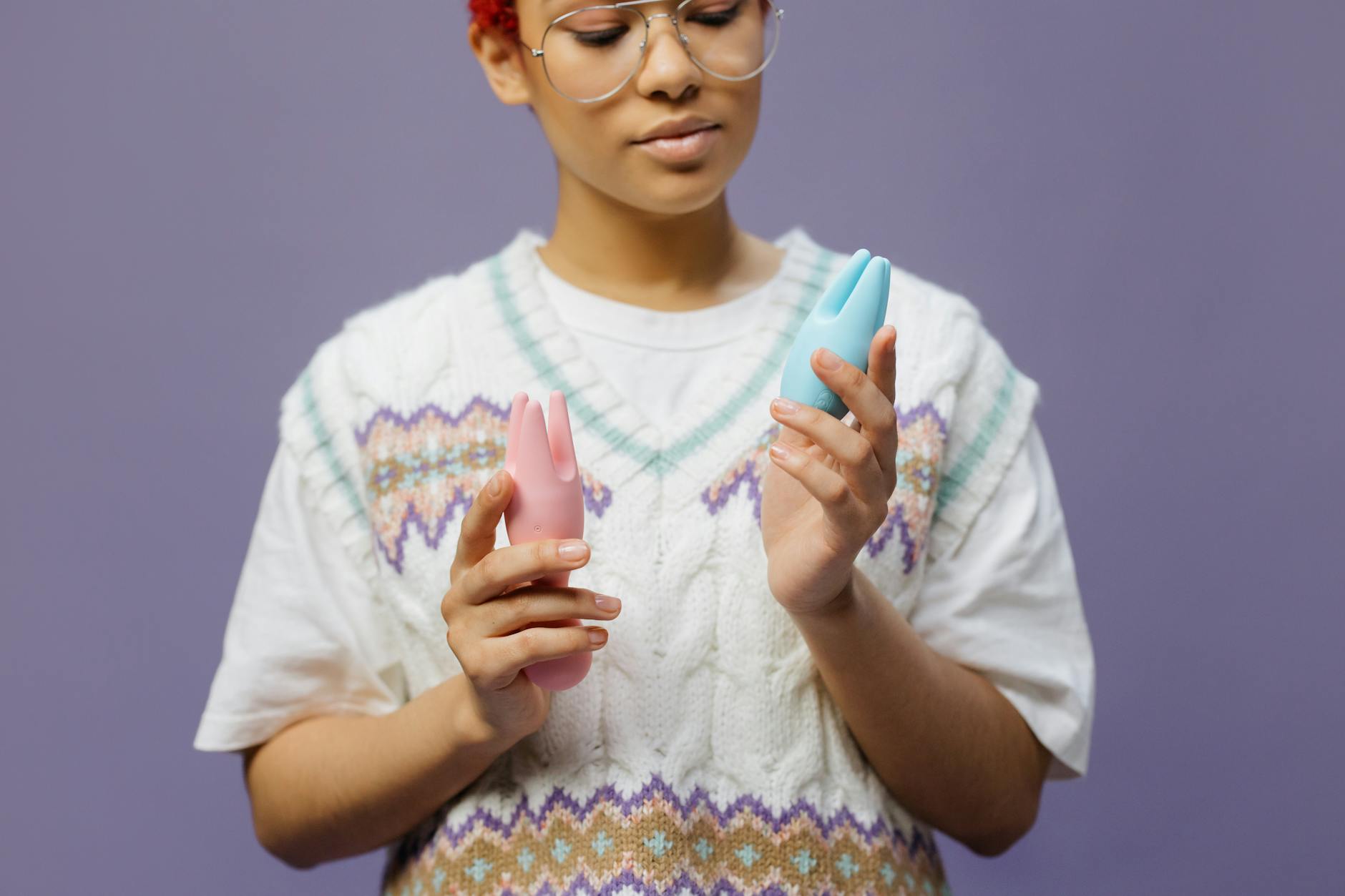
The honest answer: yes, absolutely
If your vulva gets irritated easily, you might think toys are off the table entirely. That's not true. The real story is that some designs irritate sensitive skin, and others actually help. Lemon vibrators, specifically air suction clitoral stimulators, sit firmly in the second camp. The reason has nothing to do with luck and everything to do with how the technology actually works.
Why lemon vibrators are gentler than traditional vibrators
Here's the mechanical difference that matters. A traditional vibrator creates stimulation through repetitive, mechanical motion. It makes direct contact with your clitoris and surrounding tissues with each pulse. For sensitive vulvas, this direct friction can trigger inflammation, microtears, or that raw, burning feeling that shows up hours later.
Lemon clitoral vibrators, on the other hand, use air suction technology. Instead of vibrating against tissue, they create a gentle rhythmic pulse of suction around the clitoral hood. The stimulation is indirect. There's no friction, no aggressive contact, no pounding. It's more like a sustained, rhythmic squeeze rather than constant tapping.
For people with easily irritated vulvas, this distinction changes everything. The absence of mechanical friction means significantly less inflammation, fewer microtears, and almost no postplay burning or rawness. You get sensation without the aftermath.
The material factor
Material quality matters more for sensitive skin than almost anyone realizes. Cheap vibrators often use porous plastics or silicones that hold bacteria and irritants. They shed microparticles. The manufacturing tolerances are loose, which means rough edges or uneven surfaces that catch and irritate delicate tissue.
Hello Nancy's lemon vibrators are made from medical-grade silicone that's non-porous and hypoallergenic. The manufacturing is precise. Nothing sheds, nothing harbors bacteria, and the surface is smooth from rim to base. This alone prevents a whole category of irritation that sensitive people experience with lower-quality toys.
If your vulva gets irritated by cheap toys, switching to a properly manufactured lemon vibrator often feels like switching from rough cotton to silk.
How to use a lemon vibrator if you have sensitive skin
Even with the right toy, technique matters. Here are the four adjustments that make the biggest difference:
Start on the lowest setting. Your first instinct might be to dial up the suction strength, but resist it. Begin on pattern 1 or 2 and spend 10-15 minutes getting used to the sensation. The suction can feel intense at first, especially if you've never tried air suction before. Your tissues will adjust, and you'll discover that lower settings often deliver the deepest satisfaction anyway.
Use plenty of water-based lubricant. This is non-negotiable. Lube reduces any residual friction and helps the suction seal work smoothly without the toy having to grip harder. A water-based formula won't degrade the silicone, and it washes away completely after, leaving no irritating residue.
Vary the position slightly. Rather than holding the toy in one exact spot for 20 minutes, shift it micro-movements around the clitoral area. This distributes stimulation and prevents the sustained suction from focusing all its intensity on one small patch of tissue.
Keep sessions to 15-20 minutes on first tries. Sensitivity often means your tissues fatigue more quickly. Start short. You can always go longer once you know how your body responds. Many sensitive people find that their best, most intense orgasms actually come from shorter, lighter play rather than long, aggressive sessions.
Red flags that mean you might need to adjust further
If you experience burning, stinging, or visible redness that doesn't fade within 30 minutes, something needs to change. It might be the lubricant (try a different brand). It might be that you went too long on too high a setting. It might be that your vulva is in a heightened sensitivity phase due to hormones, stress, or inflammation elsewhere in your body.
None of these mean you can't use lemon vibrators. They mean you need to dial back one variable and try again. The beauty of air suction is that it has multiple adjustable parameters. Lower the intensity, shorten the session, increase the lube, or take a day off and retry later.
If redness or irritation persists across multiple tries, you might be experiencing contact dermatitis from the lube or a sensitivity to the silicone itself (rare, but possible). Switch to hypoallergenic lubricant or try a coconut oil alternative (though coconut oil degrades silicone faster, so reserve it for occasional use).
Hormones, inflammation, and why sensitivity fluctuates
Here's something I see constantly in my practice: sensitivity isn't static. Your vulva might be bomb-proof one week and tender the next. This isn't a sign that something's wrong. It's a sign that your hormones are shifting, inflammation elsewhere in your body is spiking, or you're more dehydrated or stressed than usual.
Lemon vibrators accommodate this fluctuation beautifully because they're adjustable. On high-sensitivity weeks, you drop to a lower pattern and shorter session. On normal weeks, you can explore higher intensities. You're not locked into one experience.
If you notice a pattern of heightened sensitivity around your cycle, that's useful information. Some people are most sensitive in the luteal phase (after ovulation). Others are most sensitive right before their period. Once you know your pattern, you can schedule toy use for times when your vulva is less reactive.
When to see someone about chronic vulva sensitivity
If your vulva is irritated by almost everything (lubricant, toys, even underwear fabric), that's not a toy problem. That's a signal to see a vulvovaginal specialist. Conditions like vulvodynia, contact dermatitis, or chronic inflammation respond really well to targeted treatment. You're not broken, and you're absolutely not alone, but you deserve professional assessment.
Once you've addressed any underlying condition, lemon vibrators are often the toy people turn back to because they're gentle enough to use even when sensitivity is moderate.
The actual experience of using a lemon vibrator with sensitive skin
Most people tell me the same thing: it feels completely different from traditional vibrators. Less buzzy, more rhythmic. Less friction-based, more enveloping. The sensation builds slowly instead of hitting hard and fast. And crucially, there's no tender, raw feeling afterward.
You get to experience pleasure without punishment. That's the real advantage.
Frequently Asked Questions
Can you use a lemon vibrator if you have vulvodynia?
Yes, with care. Vulvodynia involves chronic pain, and aggressive stimulation can trigger flares. Air suction on the lowest settings is often tolerable where traditional vibrators aren't because there's no friction. Start with very short sessions, use plenty of lube, and don't use it on days when your vulva is already sore. Many people with vulvodynia find that gentle, consistent lemon vibrator use actually reduces overall pain over time, but you'll need to experiment to find your threshold.
What's the difference between a lemon clitoral vibrator and other air suction toys?
The main differences are material quality, precision of the suction mechanism, and pattern variety. Hello Nancy's lemon clitoral vibrators use medical-grade silicone and refined suction technology that's less aggressive than cheaper air suction toys. The pattern options are also more granular, giving you better control over intensity. Cheaper air suction toys often have three patterns: weak, medium, and "oh my god that's too much." Lemon vibrators give you more middle ground.
Should you use a lemon vibrator if you have a yeast infection or bacterial vaginosis?
No. Wait until the infection is cleared and you've been symptom-free for at least three days. During an active infection, your vulva is inflamed and vulnerable. Any toy, even a gentle one, can make symptoms worse or slow healing. Once you're clear, lemon vibrators are absolutely safe to use.
Can your vulva become desensitized to a lemon vibrator if you have sensitive skin?
It's theoretically possible, but it's rare with air suction toys because the stimulation pattern is less repetitive and more variable than traditional vibrators. The bigger risk is overuse. If you notice that you need to use it more frequently or on higher settings to feel the same sensation, that's a sign to take a break for a week or two. Your nerve endings recover quickly.
Is it normal for a lemon vibrator to make you sore if you have sensitive skin?
Soreness that lasts more than an hour suggests you went too long or too high for your current sensitivity level. It's not a flaw in the toy. It's feedback from your body that you need to dial back. Keep a tiny journal for a week: note the pattern you used, how long you played, and whether soreness happened. You'll find your exact threshold pretty quickly.
Can you use the same lube with a lemon vibrator if it irritates your skin normally?
Sometimes yes, sometimes no. Lubrication helps the suction seal work better and reduces any micro-friction, so some people find that a lube they normally react to is fine with a lemon vibrator because the toy is gentler overall. But if a lube makes you burn, it's probably best to avoid it. Try hypoallergenic options designed for sensitive skin first.