
Let's start with the gap
One of you is aroused in five minutes. The other needs twenty. One wants firm, fast patterns from the jump. The other says that's overwhelming. One gets frustrated waiting. The other feels rushed and pressured. Neither of you is broken. But the mismatch feels like a problem you need to solve together, and honestly, it gets old fast.
Here's what I see in my practice: couples think the answer is "meet in the middle," which usually means both people settling for less than they actually want. That's the wrong frame. The real answer is to stop needing the same speed to begin with. And that's where a lemon vibrator changes the equation.
Why speed mismatch happens
Arousal timelines are not arbitrary. They're shaped by physiology, past experience, stress levels, and how your nervous system is wired.
Some bodies take longer to shift from rest to arousal. Testosterone levels, blood flow patterns, how quickly your brain translates touch into signal. These are not about how attracted you are to your partner. I've worked with couples who are deeply in love and wildly attracted to each other, and still their bodies move at fundamentally different speeds.
Some of it is also learned. If you've spent years needing to move quickly through sex (limited privacy, time constraints, anxiety), your nervous system learns to sprint. Your partner, if they had more leisure time or less pressure in past relationships, learned to meander. Neither way is wrong. But they don't sync without help.
Why the old workarounds don't work
Most couples try three things, and all three fail:
Compromise on speed. You go faster than you want. They go slower than they want. You both feel frustrated. This works for maybe three times, then resentment builds.
One person focuses entirely on the other. You do all the work to get them aroused, they do nothing to prepare for your needs. The dynamic becomes one-directional and eventually feels transactional rather than mutual.
Separate pleasure from partnered sex. You both self-stimulate to where you need to be, then come together. This solves the speed problem but can feel lonely or deliberately isolated when what you actually want is to feel connected during the journey.
A lemon vibrator solves this differently because it puts independent, body-driven pleasure back into the equation without requiring your partner to be the source.
How a lemon clitoral vibrator changes the dynamic
Let's say you need twenty minutes to fully aroused. Your partner is ready in five. Here's what actually happens when you introduce a lemon vibrator to the scenario.
Your partner can begin with penetration or their own arousal or their hands on you while you use the lemon vibrator. You're not waiting. They're not frustrated. You're both moving at the pace your body needs. The lemon vibrator's suction patterns mean you can start gentle (patterns one or two) and build at your own speed without needing them to change what they're doing.
This is radically different from fingers or other toys. The lemon vibrator's sensation is distinct and self-contained. It doesn't require constant rhythm adjustment from a partner. You can use it slowly, deliberately, building sensation over time. They can do whatever their body needs in the same window. You're together but not dependent on matching each other's timing.
The practical setup
Let me walk you through what this actually looks like.
Start by naming the speed difference without judgment. Not "you take forever" but "my body typically needs about fifteen minutes to be fully responsive." This is data, not criticism. Make it his or her responsibility to know their own timeline too. Most people haven't actually timed it.
Once you both know the gap, you have options. If the gap is under five minutes, sometimes just acknowledging it removes the pressure. If it's larger, add the lemon vibrator to the foreplay window.
One real-world sequence: you start using the lemon vibrator at medium setting while they do manual stimulation or begin penetration. You're not rushing. They're not waiting. The lemon vibrator gives you agency over your own arousal while remaining deeply connected to them. You can make eye contact, kiss, talk. The toy doesn't replace intimacy. It channels it.
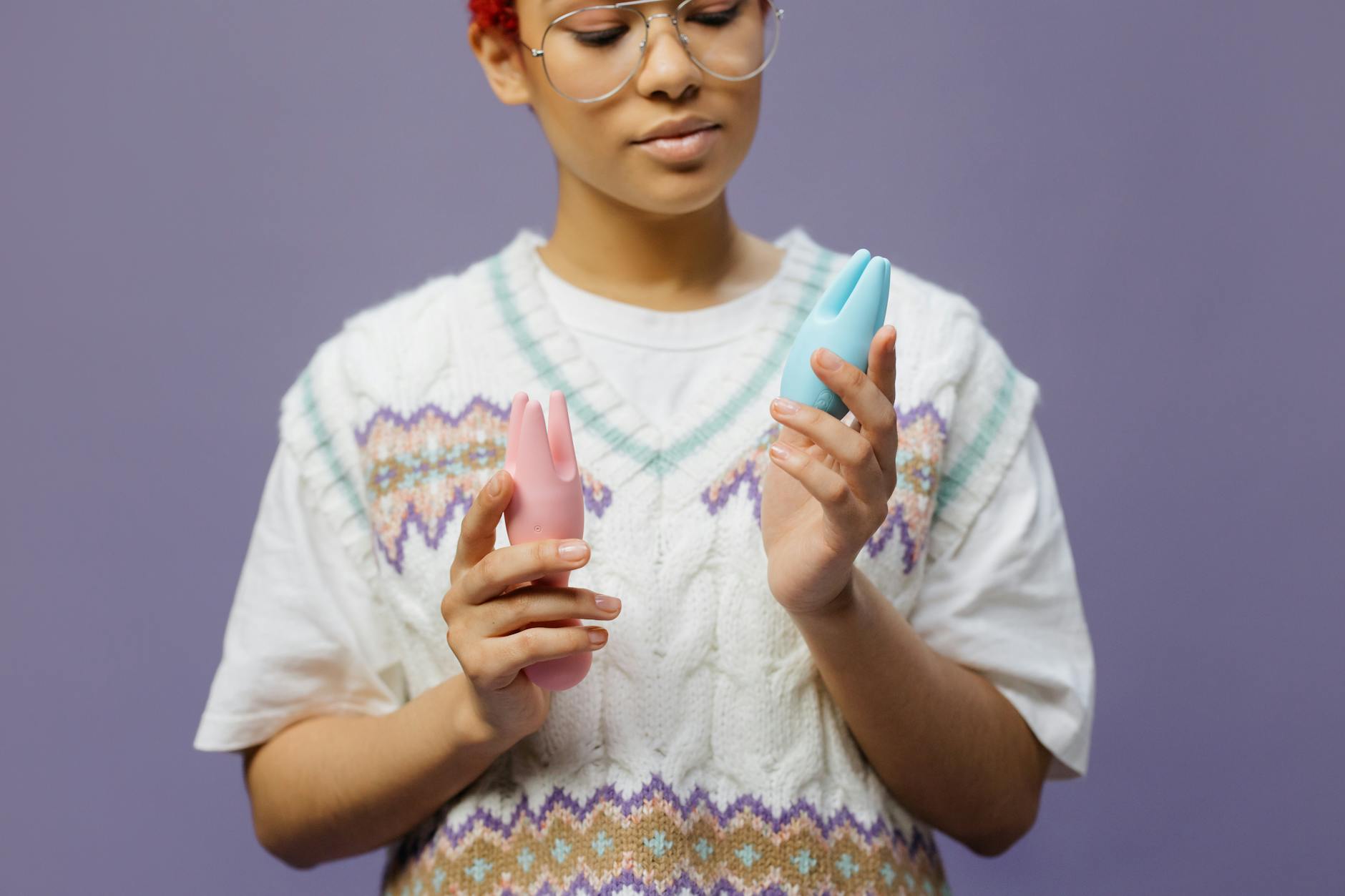
Photo by cottonbro studio on Pexels
What intensity mismatch looks like (and how a lemon vibrator handles it)
Speed and intensity are different problems but they often show up together.
Maybe your partner loves intense sensation right away. You prefer to start gentle and build. A lemon vibrator is nearly perfect for this mismatch because it has graduated intensity. You can meet them halfway by starting at pattern three while they experience what feels right to them.
Or maybe the reverse. They find firm suction overwhelming. You need that intensity to feel stimulation clearly. A lemon vibrator lets you use the Lem (the Lem Vibrator's core product) at full intensity for your body while they use slower patterns or focus on other parts of your body entirely.
You're not asking one person to tolerate sensation that doesn't work for them. You're both getting what your body actually needs.
The conversation you need to have first
Introducing a lemon vibrator or any toy into partnered sex works smoothly when there's a frame around why. Otherwise, some partners feel like they're "not enough" or that you're replacing them.
That's not the frame. The frame is: "My body needs X to feel good. Your body needs Y. Neither of us is wrong. This tool helps us both have what we need in the same moment." That's collaboration, not substitution.
Some partners need to use the toy themselves to understand. Let them hold the lemon vibrator, feel how the suction works, see that it's not some mysterious alternative. Familiarity kills anxiety.
Others need permission to stop performing. If they've been adjusting their pace to keep up with you for years, they might need explicit release to move at their own rhythm. Say it. "I don't need you to change. I need me to be able to go at my pace." That's love. That's also liberation.
When the mismatch is really about something else
Sometimes speed and intensity differences are red herrings. The real issue is that one person feels disconnected, unseen, or rushed through the entire relationship. Sex is just where it shows up.
If you find that introducing a lemon vibrator doesn't solve the tension, that's useful information. It means the speed issue isn't the core problem. That's the moment to talk to a couples therapist or relationship coach about what's actually happening underneath.
I've worked with couples where the speed mismatch was really about control. Or resentment. Or one person trying to prove something. A toy solves the mechanics but not the dynamic. That requires conversation.
The ongoing part
Once you've introduced a lemon vibrator to partnered sex, check in occasionally. Does this rhythm still work? Has your body's timing shifted? Have your needs changed? Bodies aren't static. Life stress, hormones, medication, age all shift the timeline.
What worked at thirty might not work at forty. What worked before a promotion might not work during it. The lemon vibrator stays flexible because it's literally adjustable (patterns one through seven on the Lem). But your communication about pace needs to stay alive too.
The couples I see who navigate pleasure mismatches best are the ones who treat it as data to be updated, not a problem to be solved once. The goal is never perfect synchronization. The goal is both people getting to feel good without one person sacrificing their genuine pleasure.
People also ask
Can using a lemon vibrator during partnered sex make my partner feel inadequate?
It can, but usually only if the conversation hasn't happened first. The moment you frame it as "my body needs this for my arousal" rather than "your touch doesn't work," the dynamic shifts. You're taking responsibility for your own pleasure, not blaming them for not providing it. Most partners actually feel relieved. They weren't failing you. Your body just works differently than they thought. That's permission, not rejection.
What if my partner wants to use the lemon vibrator but I find it distracting?
Then they're solving their timeline problem while you focus on yours. Some couples use toys simultaneously. Others focus on the partner without the toy while they get themselves where they need to be. There's no "should." If watching them use a lemon vibrator feels distracting to you, you might prefer they use it before you come together, or focus on other kinds of stimulation while they handle their own arousal. Communication, flexibility, zero judgment.
How do I bring up the speed mismatch without it sounding like I'm criticizing my partner?
Lead with data, not feeling. "I've noticed my body usually takes about fifteen to twenty minutes to fully respond. I don't think that's better or worse than your timeline. I want us both to feel good, so I'm wondering if we should try something different." They will almost certainly respond better to "my body needs X" than "you're always rushing me." One is factual. The other is accusatory.
Is it normal to need so much longer than my partner to feel aroused?
Completely normal. Arousal is not one speed. It's determined by nervous system wiring, past experience, current stress, hormonal status, and a hundred other variables. Some people are high-responsive. Others are slower to activate. Neither is broken. Faster isn't better. It's just different.
Can a lemon vibrator help if my partner and I have opposite intensity preferences?
Absolutely. Because the Lem has multiple patterns (one through seven), you can both get exactly what you need. You might use pattern seven while they use pattern two. You're both getting your real preference, not compromising. That's the point.
What if my partner refuses to acknowledge the speed mismatch at all?
That's a larger relationship issue. If they won't name the problem or accept that both your bodies are valid, a toy won't solve it. That's the moment to consider couples therapy. A therapist can help you both see that acknowledging differences isn't criticism. It's the foundation of actual intimacy.
The bigger picture
Mismatched arousal timelines have ended relationships. Not because the mismatch itself is fatal, but because couples tried to force synchronization instead of celebrating their difference.
A lemon vibrator isn't the answer to every couples mismatch. But it's the answer to this one: "How do we both feel good without one person performing and the other waiting?" It's a tool that says you don't have to move at the same speed to move together.
That's powerful. That's also just practical. And most couples I work with find that when the pleasure timeline stops being a battleground, the actual intimacy deepens. Because you're finally both getting what you actually want instead of what you thought you should want. If you'd like to explore how this might look for your relationship, reach out. I'm here to help.