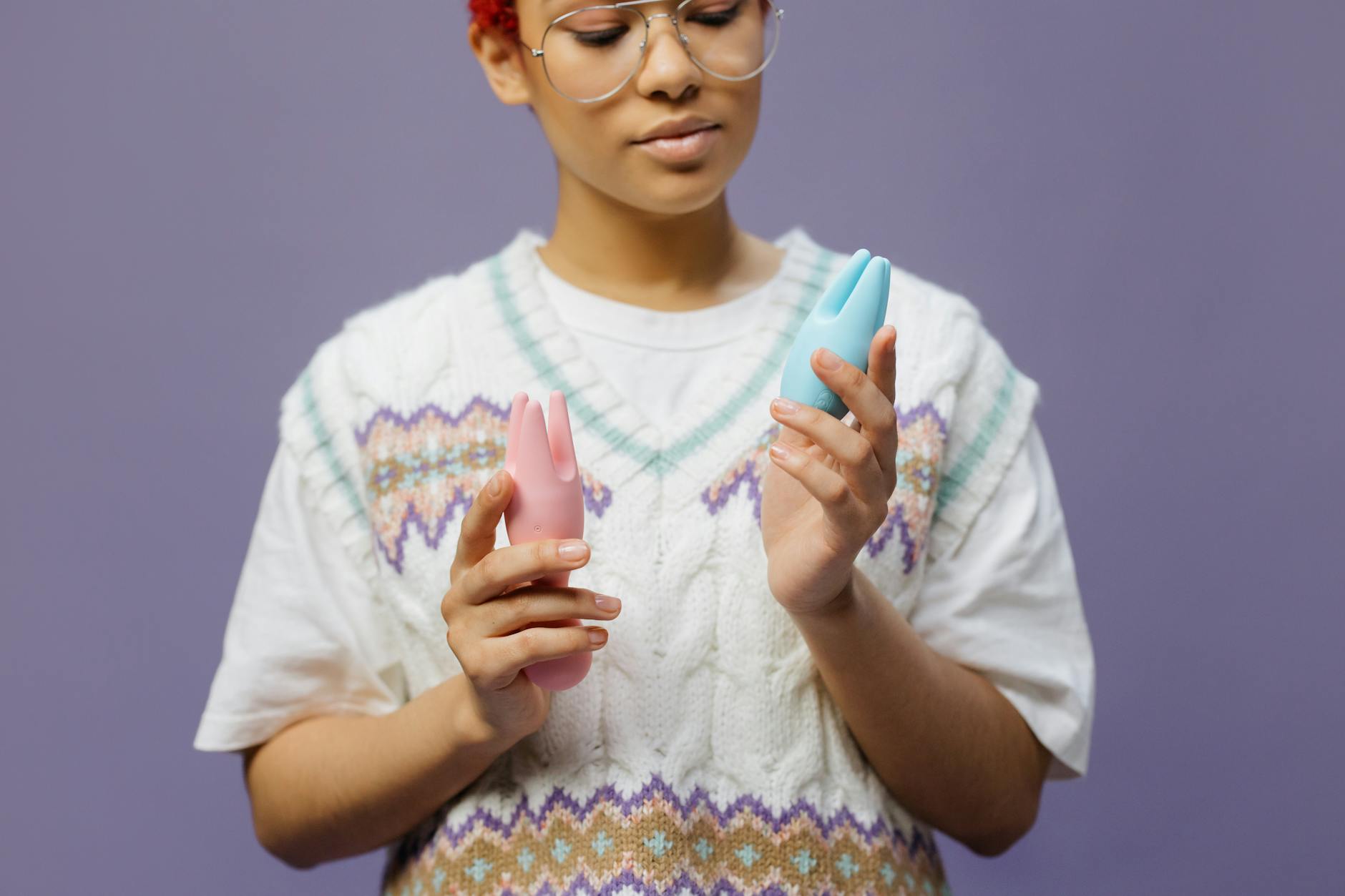
Let's talk about what happens when health changes desire
A diagnosis arrives. Or a procedure ends. Or a medication shifts everything. Suddenly, pleasure doesn't feel like permission anymore. It feels like a question mark. Will my body work the same way? Is it safe? Am I putting myself at risk? These aren't sexy thoughts. They're protective ones. And they're completely real.
Here's what I've learned after years of working with couples navigating health transitions: the physical recovery is often the easy part. The psychological permission to come back to pleasure is where most people get stuck. And that's exactly where a tool like the Lem Vibrator becomes less about sensation and more about agency.
Why fear freezes sensation
When your body has been labeled "at risk" or "compromised" or "healing," it gets harder to think of it as a source of pleasure. Your brain shifts into protective mode. It's watching. It's cautious. That caution is wise. But it can also lock you out of intimacy.
There's a second layer too. Many people who've had a health scare worry that asking for pleasure looks selfish or ungrateful. As if recovery is only supposed to be serious and medical and disciplined. Pleasure feels frivolous by comparison. It's not. Pleasure is part of recovery. It signals safety to your nervous system. It reminds your body that it's not just a problem to solve. It's also a vehicle for joy.
The permission conversation matters first
Before you reach for any tool, you need to clear something with yourself or with your partner. The question is simple: "Is pleasure part of my recovery, or am I putting myself at risk by wanting it?"
The answer is almost always the former, but you have to check it yourself. If your doctor cleared you for sex, they cleared you for self-touch and gentle pleasure too. If there are physical restrictions (like waiting a certain number of weeks post-procedure), honor those boundaries exactly. But within those bounds, pleasure is medicine. It reduces stress. It increases blood flow. It reminds your brain that your body is trustworthy.
If you're partnered, name this out loud. "I want to start touching myself again. Not because I'm avoiding you. Because I need to remember that my body is mine, and it can feel good." That distinction prevents a partner from taking it personally. It also keeps you from feeling like you're being selfish.
Why lemon vibrators help the transition
There are a few specific reasons why a tool like the Lem makes sense during a return to pleasure after health fears.
First, gentleness with control. The suction mechanism on a lemon vibrator doesn't require the same intensity as friction-based toys. You can start on a lower setting. You're in charge of speed, pressure, and duration. That agency matters psychologically. You're not at the mercy of your body's response. You're directing it.
Second, the ritual of care. Plugging in a lemon vibrator, taking 10 or 15 minutes alone, setting the intention. That's not rushed. It's ceremonial in a way that heals the split between "sick body" and "pleasure body." You're saying: I'm prioritizing this. My recovery includes joy.
Third, predictability. After health scares, uncertainty becomes triggering. A silicone toy does the same thing every time. There's no performance pressure, no guessing whether your body will "work" the way you remember. You know what the Lem does. You can meet it halfway.
The reintroduction protocol
If you haven't touched yourself for weeks or months because of health concerns, ease in. Don't jump to your pre-health-scare intensity or style.
Start with exploration without the vibrator. Your fingers, your pace, no goal. Touch your outer thighs, your hips, your collarbone. Remind your body that sensation is safe. Do this for 3-5 minutes, a few times over a week.
Then introduce the Lem. Charge it fully. Set aside 15 minutes alone. Use it on your body outside the genital area first. Your inner forearm, your collarbone, your neck. Feel what it does. What the vibration pattern feels like. Let your nervous system adjust.
Only then move to your vulva. Start on pattern 1 or 2. You're not trying to climax. You're trying to reconnect. Some people feel nothing for the first few sessions. That's normal. Your body is cautious. It will open up when it knows it's safe.
Managing intrusive thoughts during pleasure
Here's a hard truth: even when your doctor says you're cleared for sex, your brain might whisper warnings. "Is this safe? Am I pushing too hard? Will this make things worse?"
These aren't thoughts to argue with. They're signals to acknowledge. When the intrusive thought appears, pause for 10 seconds. Remind yourself: "I've been cleared. This is safe. I'm choosing this." Then resume. You're not arguing yourself out of fear. You're reinstalling permission.
If the thoughts are constant and paralyzing, a therapist who specializes in health anxiety or sex therapy is worth the investment. Sometimes the body needs professional support to reset its threat detection system.
Partner dynamics during recovery
If you're in a relationship, your partner may feel uncertain too. They might hesitate to initiate sex or touch. They might worry they'll hurt you or push too hard. That hesitation, while protective, can leave you feeling rejected when you're already vulnerable.
Create explicit agreements. "I'm ready to explore pleasure again. Here's how I want to start. I might say stop, and that doesn't mean I don't want you. It means my nervous system needs a break." Naming this prevents a partner from taking self-pleasure or caution personally. It also gives them permission to be curious alongside you instead of hovering anxiously.
Many couples find that returning to pleasure after a health scare is an opportunity to rebuild intimacy from the ground up. Not repeating old patterns. Building new ones. That can actually strengthen a relationship.
The timeline isn't linear
Some people bounce back to pleasure within weeks. Others take months. Both are normal. If you had surgery, an infection, a medication change, or a diagnosis, your body and brain needed that thing to happen. They're not trying to punish you by moving slowly. They're healing.
Trust the pace. Use the Lem when it feels right, not as a checklist item. If you have a day or week where you don't want to touch yourself and that feels heavy, that's information. Journal about it. Talk to your partner. Sometimes the block is physical. Sometimes it's emotional. Sometimes it's both.
When to reach out for help
If you've waited the recommended recovery time and cleared the all-clear with your doctor, but pleasure still feels impossible or painful, talk to a sex therapist or gynecologist. Pain with touch after a health scare can signal a few things: incomplete physical healing, pelvic floor tension (very common after procedures or stress), or trauma from the health event itself. All of these are treatable. None of them are permanent.
Similarly, if desire hasn't returned after 2-3 months of gentle exploration, that's worth investigating. It could be medication side effects, lingering anxiety, hormonal shifts, or something else entirely. A professional can help you sort it.
Closing the loop: pleasure as proof
Here's what I want you to know. Coming back to pleasure after a health scare isn't frivolous. It's not rushing recovery. It's the opposite. It's your nervous system saying, "I'm safe again. I can feel good again. This body is mine."
Using a tool like the Lem during that return isn't weakness or impatience. It's smart. You're giving yourself a way to reclaim agency, to move at your own pace, to prove to your body that recovery includes joy. That matters. Your pleasure matters. If you're ready to explore this and want guidance, reach out.
People also ask
Can I use a lemon vibrator while I'm still healing from a procedure?
Depends on the procedure and the timeline. If you had gynecological surgery, most doctors clear you for external touch and gentle self-pleasure within 3-4 weeks, though internal penetration may require 6+ weeks. Always ask your surgical team specifically. "Is it safe for me to use an external vibrator?" They can give you a clear answer. Until then, gentle hand touch is fine for most people.
Will using a vibrator help me get back to normal more quickly?
Pleasure supports recovery psychologically and physically. It reduces cortisol, increases blood flow, and reminds your nervous system that your body is trustworthy. That said, vibrators aren't medicine. They're tools for reconnecting with sensation. If you're clearing it with your doctor and your body feels ready, they can absolutely be part of your healing toolkit.
What if I feel guilty about wanting pleasure again after my health scare?
That guilt is common. It often comes from a belief that recovery should be joyless or that wanting pleasure means you're not taking your health seriously. Both are myths. Recovery that includes pleasure is more sustainable than recovery that's purely restrictive. If the guilt is intense, talking to a therapist about it can help you untangle whether it's protective caution or shame. There's a difference, and it matters.
Is it normal for sensation to feel different after a health event?
Very normal. Medications can change sensation. Procedures can affect nerve pathways. Stress and anxiety literally reduce blood flow to your genitals. And sometimes your brain has wired pleasure to "unsafe" as a protective measure. All of this resolves with time, patience, and gentle reconnection. If sensation doesn't improve within a few months, a gynecologist or sex therapist can help you investigate whether something else is going on.
Should I tell my partner I'm using a lemon vibrator again?
Depends on your relationship and what honesty looks like for you both. If pleasure is something you share, yes. If self-touch is private for you, that's also valid. The important part is that you're not using secrecy to avoid an uncomfortable conversation about sex or intimacy. If you're hiding it because you're worried about your partner's reaction, that's worth addressing. After a health scare, honesty about what you need actually brings couples closer.
How do I know if I should see a sex therapist during this recovery?
Consider it if pleasure hasn't returned after the medical all-clear and the recommended healing time. Also if you're experiencing pain, if your partner is struggling with the changes, or if anxiety is blocking you completely. Sex therapists specialize in exactly this: pleasure after illness, trauma, or life transitions. You don't have to figure it out alone.