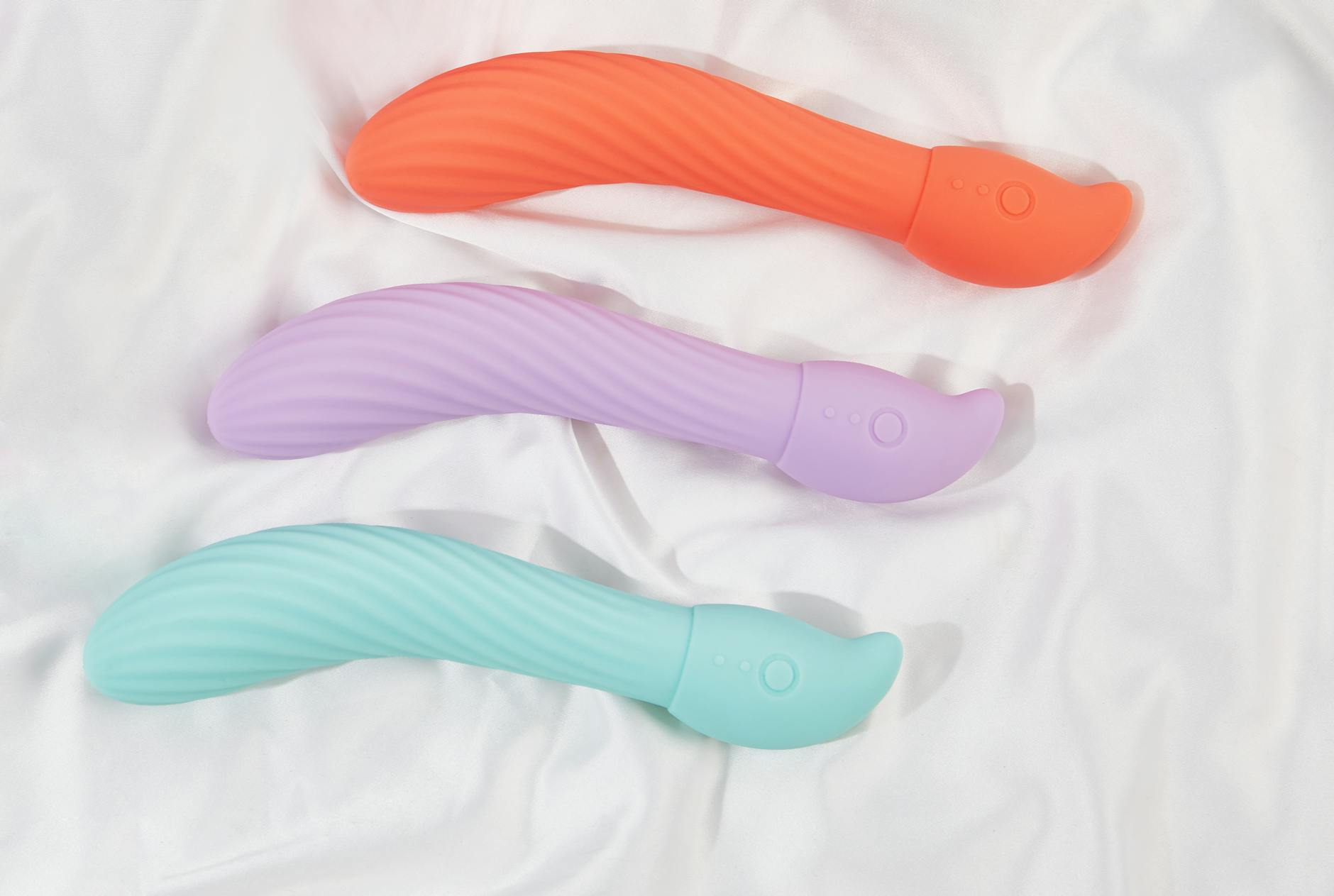
The real reason long-term couples stop having great sex
It's not that you stop wanting each other. It's that you stop trying. After five, ten, or twenty years together, the effort of creating novelty feels like it should be automatic by now. You know each other's bodies. You've built a life together. Sex becomes functional, routine, something you do rather than something you explore. Then one day you realize you can't remember the last time you both came at the same time, or the last time either of you was genuinely surprised.
Here's what I see in my practice: couples don't need therapy to fix desire. They need permission to change. A lemon vibrator is that permission wrapped in silicone.
What changes when you've been together a long time
Physically, a lot shifts. If you're in your forties or fifties, hormones change. Stress compounds. Arousal takes longer. The kind of stimulation that worked at twenty-five doesn't necessarily work at forty-five. If you have a partner, their body is changing too. You're both aging, and aging is not a problem to be fixed. It's information.
But the real issue isn't bodies. It's conversation. Most long-term couples never actually talk about what feels good anymore. You've been with the same person for years, so you assume you know. You don't. Their preferences have evolved. So have yours. A lemon vibrator makes that conversation unavoidable, which is exactly the point.
When you introduce a new tool, you're forced to say: "I want to try this. Will you try it with me?" That question alone rewires the dynamic. Suddenly you're collaborating instead of defaulting.
Why lemon vibrators work better than other toys for couples
Air-suction technology is different from traditional vibrators, and that difference matters when you're trying to rebuild intimacy. A lemon vibrator is quiet. It's not aggressive. It feels more like sensation than vibration, which creates space for closeness instead of replacing it.
When your partner is inside you or watching you use a lemon clitoral vibrator, they're witnessing pleasure, not being pushed out of it. The suction sensation is localized. It doesn't numb you out. You're still connected. You can still make eye contact. You can still talk.
Hello Nancy's lemon vibrator is designed for this. It's small enough to use during partnered sex without being awkward. It's intuitive enough that neither of you needs to figure out which button does what. Most couples tell me it becomes part of foreplay faster than they expected.
How to introduce the idea without it feeling like rejection
Timing matters. Don't bring it up mid-argument or when you're both already frustrated. Bring it up when you're playful, maybe even joking. "I found this thing. I think we might actually like it. Want to try it?"
Or: "I read that couples who play with toys have better sex overall. Seems worth testing."
Or: "Honestly, I miss feeling like we were discovering things together. Can we try something new?"
The frame is everything. If you frame it as "something's wrong," your partner hears "something's wrong with me or with us." If you frame it as "I want more of you, and I think this could help," the conversation becomes about desire instead of deficit.
If your partner is hesitant, listen. Often the hesitation isn't about the toy. It's about vulnerability. Long-term couples develop armor. Introducing something new asks you to take it off. That's scary. Honor that. Give it time.
How to actually use a lemon vibrator together
Start with exploration, not performance. The first time, don't aim for orgasm. Aim for curiosity. Let your partner touch it, feel the sensation, try different patterns. You do the same. This is not foreplay yet. This is museum. You're looking at an exhibit together.
The second time, you can move toward actual sex. Use it during foreplay. Let your partner use it on you. Pay attention to what changes. Does your arousal deepen? Does your orgasm feel different? Talk about it afterward, even if it's just "that was interesting" or "I want to try it again."
If you're having partnered sex, the lemon vibrator works best when your partner is using it on you, either during penetration or during oral sex. Some couples use it solo in the same room. Some use it while their partner watches. There's no script here. You're writing it together.
Here's the thing that surprises most couples: adding a toy doesn't make sex feel less intimate. It makes it feel more honest. You're both admitting you want more pleasure. That's vulnerable. That's also arousing.
What happens to desire when you stop performing
After years together, a lot of couples fall into patterns where one person is always the initiator and the other waits to be asked. Or you've settled into positions and rhythms that work "well enough." The lemon vibrator interrupts that pattern.
When you're both experimenting with something new, neither of you gets to disappear into your familiar role. The person who usually receives can take more control. The person who usually initiates can let go. Power dynamics shift. That shift is where desire lives.
I've had couples tell me that introducing a lemon clitoral vibrator made them realize they'd forgotten how to be playful together. Not playful like kids. Playful like adults who want each other. That tone changes everything.
The conversation that comes after
This is the part nobody talks about, and it's the most important. After you've used a lemon vibrator together, you need to debrief. Not clinically. Just honestly.
"What did you like?" "What felt weird?" "Do you want to do it again?" "What would make it better?"
These conversations are where real intimacy rebuilds. You're no longer assuming. You're asking. You're listening. You're adjusting based on what your partner actually wants, not what you think they should want.
Long-term couples often skip this step because you're supposed to just know. But you don't. None of us do. The willingness to keep asking is what separates couples who stay interested in each other from couples who just stay together.
When to consider other options
If a lemon vibrator doesn't work for you, that's fine. The goal isn't the specific toy. The goal is the conversation and the willingness to change. Some couples find that what they actually needed was permission to talk about desire at all. Some find that external help, like working with a sex therapist or a couples counselor, is the better entry point.
What matters is that you're both showing up. You're both willing to try. You're both interested in each other's pleasure, not just the logistics of sex.
Intimacy in long-term relationships isn't about staying the same. It's about changing together. A lemon vibrator is just a very practical way to start.
People also ask
Will using a lemon vibrator make my partner feel inadequate?
If you frame it right, no. The key is making it clear that the toy is about adding to what you already have, not replacing them. When both of you are using it and curious about it together, it becomes collaborative. If your partner already has insecurity about their sexual performance, you might need to have a broader conversation first about what you appreciate about your sex life before introducing a new tool. But a lemon clitoral vibrator isn't a judgment on your partner. It's an expansion of pleasure for both of you.
Can we use a lemon vibrator during penetrative sex?
Absolutely. If you have a vulva and your partner has a penis, the lemon vibrator can be used during penetration. Your partner can hold it or you can. It adds sensation without interference. Some couples find the angle easier if they're in specific positions. Experiment. You'll find what works for your bodies.
How do I bring this up if we've never talked about toys before?
Start small. You don't need a big conversation. "I read about this thing and I'm curious if we'd like it. Want to try it?" is enough. If they say no, that's information. You can ask why. Maybe there's a conversation underneath the no. Maybe they're open to it later. Don't push. But do let them know it matters to you to explore together.
What if we try it and it doesn't work for one of us?
That happens. Not every tool works for every body or every couple. The point wasn't the lemon vibrator specifically. The point was that you tried something new and you talked about it. That willingness is what rebuilds intimacy. If the vibrator itself doesn't feel good, you've still succeeded because you've proven you're willing to experiment. Next time, try something different.
Is a lemon vibrator better than other vibrators for couples?
It depends on your bodies and your preferences. A lemon vibrator is quieter and less aggressive than many traditional vibrators, which can feel better for couples who want to stay connected during sex. The sensation is more localized and specific. But some couples prefer the intensity of other toys. The best toy is the one you both want to use. If that's a lemon clitoral vibrator from Hello Nancy, great. If it's something else, that's fine too. What matters is that you're choosing it together.
How often should we use it together?
There's no rule. Some couples use a lemon vibrator every time they have sex. Some use it occasionally, when they want to shift the dynamic. Some use it solo and sometimes together. The frequency doesn't matter. What matters is that you both enjoy it. If using it feels like pressure or obligation, you've missed the point. It should feel like permission to want more.