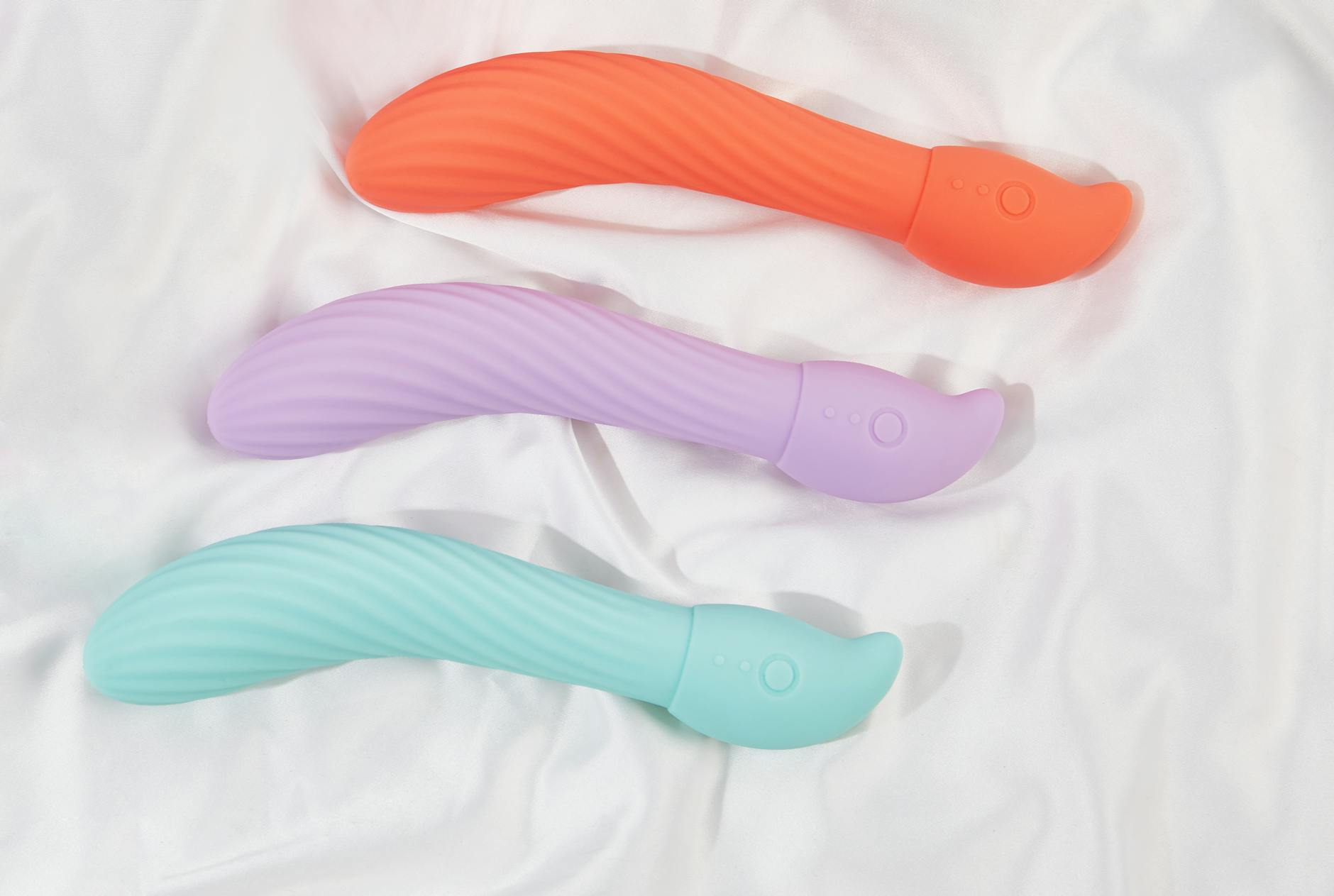
Let's address the worry head-on
You've probably heard it: use vibrators too much and you'll numb yourself. Your body will stop responding. You'll need increasingly intense stimulation just to feel anything. The fear is real, and I get asked about this constantly.
Here's what's actually true and what's myth.
What desensitization actually is (and isn't)
Desensitization is a real neurological thing. It happens when your nervous system gets a constant signal and eventually stops noticing it. Think about a shirt you wear every day—you stop feeling it against your skin after five minutes.
But here's the critical part: sexual desensitization is not about the strength of stimulation you need. It's about novelty. Your brain gets bored with the same sensation in the same way, not with vibration itself.
Research on vibrator use (yes, there is serious research on this) shows no evidence that regular vibrator use permanently damages nerve sensitivity or makes you unable to orgasm without one. What researchers do see is this: if you use the exact same device at the exact same intensity in the exact same way every single time, your orgasms might come slower. Not because you're broken. Because your nervous system is smart and efficient. It recognizes the pattern and stops being as surprised by it.
That's different from permanent damage. And it's entirely reversible.
The pattern-breaking strategy
If you want to use lemon vibrators or any clitoral vibrator frequently without sliding into boredom, the answer is simple: vary what you're doing.
This might sound like you need five different devices. You don't. You need to use the one you have differently.
Switch up the intensity. A lemon clitoral vibrator usually has multiple settings. If you always use pattern 5, alternate weeks using patterns 2 through 4. Your nervous system stays engaged because the stimulus isn't predictable.
Change your rhythm. Instead of holding it in one spot until orgasm, try moving it in small circles, holding it, moving again. Pulse instead of sustained vibration. Let your partner use it on you instead of doing it yourself. The directional changes matter.
Vary the timing. Don't always masturbate at the same point in your cycle. Some people find sensation is sharper during certain phases. Waiting longer between sessions can also restore that "holy wow" feeling—though you don't need to abstain for weeks. Even three to five days of variation can be enough.
Mix devices. If you have access to more than one lemon sucker or vibrator, alternate them. The Lemon's specific shape and suction pattern is distinct from a traditional vibrator or wand. Your nervous system is reading dozens of data points: firmness, texture, vibration frequency, shape. Switching between them keeps that novelty alive.
The frequency question
How often is safe? The honest answer: there's no magic number. You can use lemon vibrators every single day and not damage your sensitivity—if you're varying the input. You can use them three times a week and still experience boredom if you're doing the exact same thing every time.
What I tell my clients: if your orgasms are feeling slower to arrive, that's your signal to change something, not to stop. If you're still feeling pleasure and you're still finishing, you're doing fine.
The people who do report genuine problems are doing one of two things. Either they're using maximum intensity constantly (which can create temporary numbness—usually recovers in days), or they're experiencing psychological pressure to climax combined with a repetitive routine, which tanks desire regardless of the device.
Neither of those is about vibrators being dangerous. They're about technique.
Lemon vibrators and sustained sensitivity
There's actually something interesting about air-suction devices like the Lemon. Because the stimulation mechanism is suction rather than direct vibration, users report less desensitization than with traditional vibrators. The sensation profile is different—it's less about getting used to a buzz and more about the unique pressure sensation, which stays novel longer.
If sensitivity maintenance is your concern, this is one reason lemon vibrators hold up well over time. The stimulus is less repetitive at a neurological level because suction stimulation recruits different nerve pathways than vibration alone.
What actually causes lasting problems
Desensitization that sticks around usually isn't from vibrators. It's usually from one of three things.
Anxiety about performance. If you're worried you're "using the vibrator too much," you create tension that makes orgasm harder. Anxiety genuinely numbs sensation. The vibrator is innocent.
Hormonal shifts. Menstrual cycle, birth control changes, stress levels, sleep quality—these all affect sensitivity far more than vibrator use. Someone in a high-stress period might feel numb, blame their vibrator, and then feel fine two weeks later when stress drops. It was never the device.
Pelvic floor tension. If your pelvic floor muscles are chronically tight (which is shockingly common), no amount of vibration will feel as good because the muscles can't relax into pleasure. This gets misread as "vibrator desensitization" when it's actually pelvic floor dysfunction. The fix is pelvic floor relaxation work, not avoiding vibrators.
Your actual maintenance routine
If you want to use lemon vibrators as a regular part of your pleasure life without worrying about desensitization, here's what actually matters.
One: Vary intensity and pattern weekly. Don't get stuck in "I only like setting 4." Explore the range.
Two: Change position and timing occasionally. You don't need to do something different every session. But switching it up monthly is enough.
Three: Take breaks. Not because vibrators are bad for you, but because breaks reset novelty. A week or two off every couple of months can refresh everything. Some people prefer this naturally. Others need to be intentional about it.
Four: Pay attention to your cycle if you menstruate. Sensitivity genuinely fluctuates. Using the vibrator during your most sensitive window can feel better, and alternating when you use it keeps things interesting.
Five: Watch for anxiety about usage itself. The biggest sensitivity killer is the story you're telling yourself. If you believe vibrators will numb you, that belief will create tension that numbs you. Not the vibrator. The worry.
The bottom line
You can use lemon clitoral vibrators regularly. You can use them frequently. You can absolutely incorporate them into your partnered sex life or solo routine without losing the ability to feel pleasure. The key is doing it thoughtfully, with variation, not repetitively with fear.
Desensitization is a real thing in the right context. But that context is almost never "someone used a good vibrator too often." It's usually "someone did the exact same thing every time and their nervous system got efficient about it."
Your body is not fragile. Pleasure is not a finite resource that gets used up. What you do need is to stay curious, vary your input, and trust that your nervous system knows how to feel good when you're not white-knuckling the outcome.
If you're ever concerned about a genuine change in sensation—numbness that doesn't go away after a week or two, pain where there wasn't pain before, difficulty with arousal across the board—those are worth discussing with a provider. But regular vibrator use? That's not on the worry list. That's on the pleasure list.
People also ask
Can you become addicted to using lemon vibrators?
Addiction is a clinical term and doesn't apply to vibrator use in the way people usually mean. You can develop a preference for vibrator orgasms over partnered sex or solo exploration, which is a behavioral pattern worth noticing, but that's not addiction—that's a choice your brain is making because vibrators are efficient. If partnered pleasure matters to you and you're avoiding it because the vibrator feels better, that's worth exploring, maybe with a sex therapist. But the vibrator itself isn't addictive the way substances are.
How long does desensitization last if I do overdo it?
If you use maximum intensity repeatedly for hours, you might feel temporary numbness—sort of like how your arm falls asleep. That usually resolves in hours to a day or two. True desensitization from novelty wears off as soon as you change your routine. There's no permanent clock. Your nervous system re-engages as soon as the stimulus changes.
Is it normal that I need a vibrator to orgasm now when I didn't before?
This is incredibly common and not necessarily a problem. Your nervous system might just have learned that this is the most efficient path to pleasure. If you want to expand your options, you can—by practicing different types of stimulation, using the vibrator less frequently, or exploring partnered touch. But if the vibrator works and you enjoy it, that's genuinely fine. Many people need vibrators to climax, and that's not a flaw.
Can using a lemon vibrator too much make my clitoris bigger or change it physically?
No. Vibrators don't change clitoral anatomy. What they do change is blood flow and engagement during arousal, which might make your clitoris appear slightly larger or more pronounced when you're aroused—but that's true of any stimulation. It goes back to baseline when you're not aroused. Regular vibrator use doesn't create permanent anatomical changes.
Do I need to "take a break" from vibrators to keep my sensitivity?
Not necessarily. Some people feel like breaks reset things, and if that works for you, great. But continuous use with variation is also fine. It's the variation that matters, not the breaks. Though honestly, most people naturally take breaks based on mood, cycle, stress, and life. You don't need to force abstinence on yourself.
Is there a difference in desensitization between different types of vibrators like lemon suckers versus traditional vibrators?
Yes. Air-suction devices like the Lemon stimulate differently than vibratory devices, so they tend to stay novel longer. Your nervous system isn't getting the same repetitive signal. If you're concerned about desensitization, suction-based vibrators generally hold sensation longer than traditional buzzing vibrators. That said, the variation strategy works for any device.
Ready to explore?
Your pleasure deserves to be sustainable and joyful, not something you're managing out of fear. If you have questions about what device might work best for you, or you want to understand your own pleasure response better, reach out to us. And if you're just getting started with lemon vibrators, our buying guide walks through everything you need to know.
Your sensitivity isn't fragile. It's resilient. Trust it.