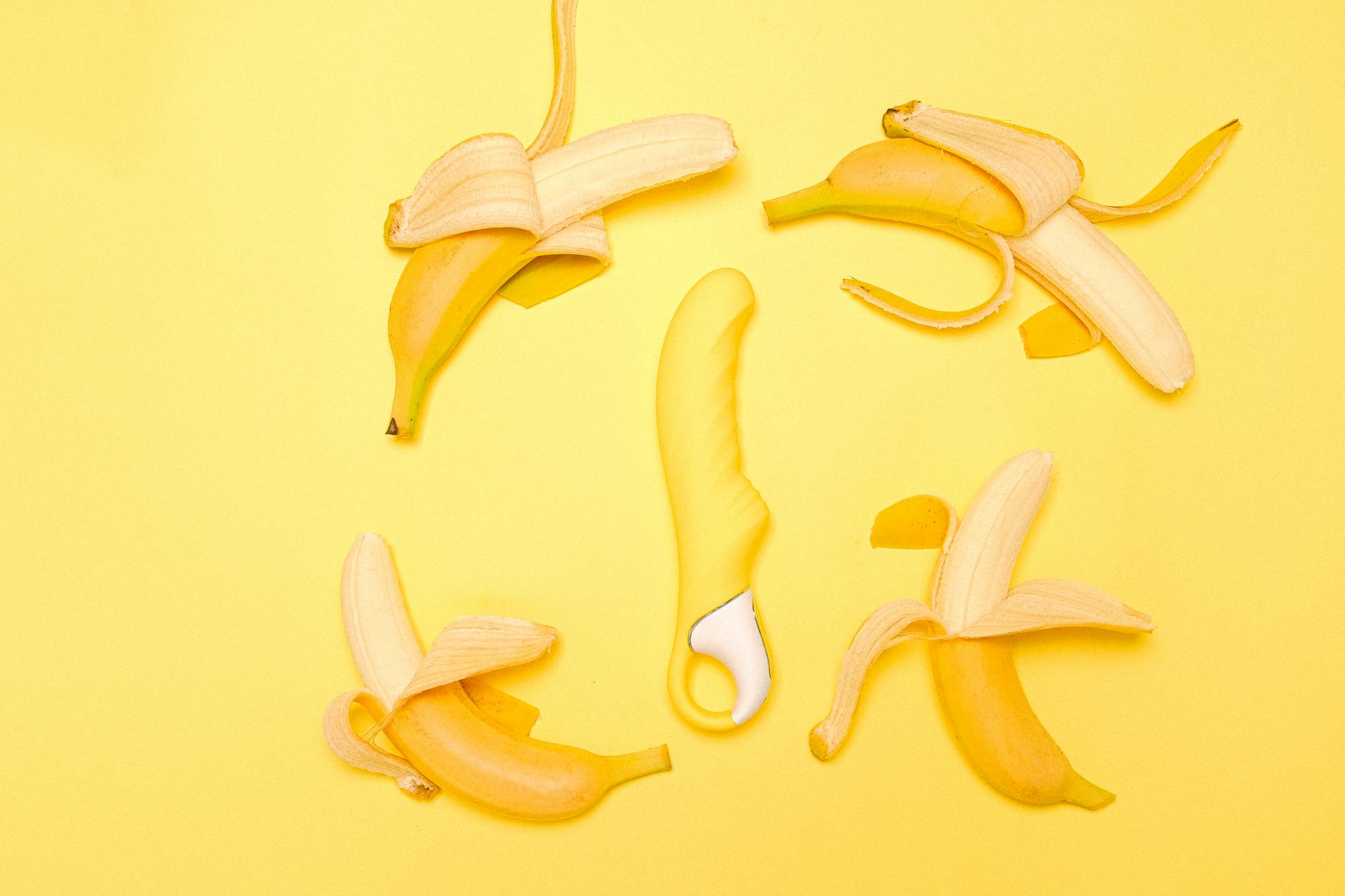
Let's talk about cycle syncing and real pleasure
Here's what nobody tells you about your menstrual cycle: it's not just about fertility and mood. It's a four-week hormonal symphony that changes how your body experiences touch, arousal, and orgasm. The way your clitoris responds to a lemon vibrator on day five of your cycle is genuinely different from how it responds on day seventeen. Not better or worse. Different. And if you know how to work with those shifts instead of fighting them, your orgasms get sharper, deeper, and way more satisfying.
This isn't new age stuff. This is basic endocrinology. Estrogen and testosterone peak during ovulation, making your tissues more engorged, your nerve endings more responsive, and your capacity for sensation wider. Meanwhile, during the luteal phase (after ovulation), your nervous system is more sensitive to everything, including vibration intensity. That matters if you're using a Lem vibrator or any clitoral vibrator, because the same setting that feels perfect on one day can feel too much or not quite right on another.
What happens to sensation across your four phases
Your menstrual cycle has four phases, and each one changes your baseline sensitivity in predictable ways.
Menstruation (days 1-5). Estrogen and testosterone are both low. Your vulva is less engorged, tissues are a bit drier, and arousal takes longer to build. This isn't the best time for new vibrator explorations, but it also doesn't mean you can't have pleasure. You'll just need more warm-up time, and you might prefer lower settings on your Lem.
Follicular phase (days 6-12). Estrogen starts climbing. Your tissues begin to plump up, natural lubrication improves, and sensitivity starts its upward swing. By the end of this phase, you're getting closer to your fertile window. This is a good time to explore medium intensity settings.
Ovulation (days 13-16). This is the peak. Both estrogen and testosterone surge. Your clitoris is maximally engorged. Your nervous system is primed for sensation. This is when higher vibration patterns feel amazing and orgasms come faster. If you want to experiment with stronger stimulation or novel patterns on your lemon clitoral vibrator, ovulation is your greenlight phase. Your body can handle intensity here without tipping into overstimulation.
Luteal phase (days 17-28). Progesterone rises, estrogen dips, and everything gets paradoxical. Your nervous system becomes more sensitive overall, which sounds good but actually means you're quicker to feel overwhelmed by vibration. Your tissues stay engorged longer during arousal, but you need more time to get there. The sweet spot here is lower settings, longer warm-up, and patience.
How to adjust your Lem technique by phase
If you have a lemon clitoral vibrator, here's exactly how to adapt.
Menstruation. Use patterns 1 or 2. Take 20-30 minutes for warm-up, and honestly, consider a warm compress on your lower abdomen first. Water-based lube is non-negotiable. Lighter pressure. This is the phase where slower, roaming stimulation beats staying locked in one spot. Let the vibrator explore.
Follicular phase. Patterns 1-3 work beautifully here. You'll notice arousal building faster than during menstruation. By week two, you can experiment with slightly longer contact time in one area, but don't go aggressive yet. Lubrication should be better, so you might not need as much extra lubricant, but check your individual response.
Ovulation. This is where you can push intensity. Patterns 3-5 on your Lem are fair game. You can hold the vibrator steady on your clitoris without discomfort. Orgasms will come faster and feel more powerful. This is also the best phase for longer sessions, because your capacity is higher. Some people find that multi-orgasms feel more achievable during ovulation, and it's not imagination. The physiology actually supports it.
Luteal phase. Return to patterns 1-3. Here's the counterintuitive part: even though your nervous system feels more sensitive, that doesn't mean you want intensity. What you want is precision and patience. Keep the vibrator moving rather than locked into high-frequency buzzing on one spot. Gentler patterns paired with extended warm-up work better than pushing through to intensity.
The warm-up rule that changes everything
Most people assume warm-up time is about falling in love with foreplay. But physiologically, warm-up is when blood flows to your clitoris, engorges the tissues, and brings sensation online. The amount of warm-up you need is inversely related to where you are in your cycle.
During ovulation, you might only need five or ten minutes before your Lem vibrator feels completely right. During menstruation, you might need twenty-five minutes of touching, kissing, anticipation, or just lying there thinking about what you want. That's not a flaw. That's information.
The rule: take as much warm-up time as you need, and don't treat it as foreplay preamble. It's part of the event. Enjoy it.
Why lubrication needs change across your cycle
During the follicular phase and ovulation, your body produces more natural lubrication. You might notice you need less extra lubricant when using your lemon clitoral vibrator. During menstruation and the luteal phase, you'll want more.
This isn't weakness. It's cycle variation. Stay with water-based lube throughout. It's safe with silicone toys like the Lem, and it feels better than trying to shortcut with saliva or skipping lube entirely.
One practical tip: apply lube before you turn on your vibrator, not after. It gives your nervous system a chance to register sensation without the distraction of applying something cold.
Tracking what works so you don't have to remember
Here's where most people lose the thread. You discover something works amazing on one day and then forget to try it on the same phase next month. Then you rediscover it three months later and feel like you're starting over.
Keep a one-line note on your phone or period app: "Ovulation. Tried pattern 4 with longer warm-up. Way better orgasm." Next cycle, when you hit ovulation, you have a note waiting.
You don't need a detailed journal. Just enough to remember what your body liked last time.
What doesn't change across your cycle
This matters just as much: your capacity for pleasure, your ability to orgasm, and the neural pathways that make sensation enjoyable. Cycle syncing isn't about becoming a different person. It's about working with your biology instead of against it.
The clitoris has between eight thousand and ten thousand nerve endings. Those don't disappear on day three or day twenty-five. The sensitivity shifts, but the hardware is always there. People sometimes worry that adapting their vibrator technique across cycles means accepting that pleasure is less available sometimes. It's the opposite. It means you're optimizing for when pleasure is easiest, and you're being realistic and kind to yourself during phases when it requires more setup.
When to see a doctor about cycle-related sensation changes
If your sensitivity shifts are new and extreme (suddenly you can't feel anything where you used to, or vibration causes sharp pain), that's worth mentioning to a gynaecologist. Hormonal contraceptive changes, thyroid shifts, medication side effects, or hormonal imbalances can all mess with sensation.
But normal variation across your cycle? That's expected biology. Track it, work with it, and notice how much better everything feels when you stop fighting your own hormones.
The best thing about understanding your cycle isn't just better orgasms, though that's the immediate payoff. It's the deeper sense of your body having its own rhythm, its own intelligence, its own seasons. Your lemon clitoral vibrator is a tool. Your cycle is a map. The two together? That's where real pleasure happens.
People also ask
Can you use a Lem vibrator every day, or does your cycle matter?
You can use any clitoral vibrator every day if you want to. Your cycle doesn't make it unsafe. But the experience will shift. What feels great on ovulation day might feel too intense during menstruation, and what feels perfect during the luteal phase might feel understimulating during ovulation. The choice to use your Lem every day is yours. The choice to adjust settings and warm-up time to match your actual sensitivity is where the real pleasure gain comes in.
Why do my orgasms feel different around ovulation with lemon clitoral vibrators?
During ovulation, estrogen and testosterone peak simultaneously. Your clitoris is more engorged with blood, your nerve endings are primed, and your orgasmic response is faster and often more intense. It's not that orgasms are "better" only during ovulation. It's that they're differently good. Ovulation orgasms might feel sharper and more full-body. Luteal phase orgasms might feel deeper and more centered. Different isn't better. It's information about your baseline.
Should I tell my partner about how my cycle affects sensation with vibrators?
Yes, if you have one. It's actually a useful conversation, because it shifts the frame from "something's wrong" to "here's what works for me right now." If you say "During ovulation, I can handle higher settings" or "During my period, I need more warm-up," your partner has actual information instead of guessing. Same goes if you're flying solo. Knowing that your body has its own rhythm takes the guesswork out of frustration.
Does cycle syncing work with every vibrator, or just air-suction devices like the Lem?
Cycle syncing works with any vibrator. The principle is the same: your sensitivity shifts, so your approach shifts. Air-suction devices like a lemon sucker respond particularly well to cycle syncing because suction stimulation feels good across a wider sensitivity range. But traditional vibrators, wand vibrators, and any other design benefit from adjusting intensity and warm-up time to match your cycle phase.
What if my cycle is irregular because of hormonal birth control or PCOS?
Hormonal birth control flattens your hormonal fluctuations. You won't see as dramatic a shift across your cycle, but some micro-variation still happens. Track what you notice over two to three months and adjust accordingly. If you have PCOS or another condition that makes your cycle unpredictable, tune in to how you feel rather than the calendar. Your body will still give you information. It might just not follow a textbook twenty-eight-day rhythm.
Can you use lemon sexual toys during menstruation, or is that not safe?
It's completely safe to use any adult toy during menstruation. Your vulva isn't more fragile or infection-prone during your period. The only practical adjustments are lube (use more), warm-up (take longer), and choosing lower settings because that phase naturally has less engorgement. Safety-wise, you're fine.
The real takeaway
Your cycle isn't a bug in your pleasure system. It's a feature. Understanding how your sensitivity shifts across ovulation and the other phases, and adjusting how you use lemon clitoral vibrators to match, isn't about forcing your body to perform. It's about finally listening to it. When you align your technique with your biology instead of pretending your body feels the same all month, orgasms get more reliable, more satisfying, and honestly, more interesting. That's not optimization. That's respect.
Have questions about how to get started? Reach out. We're here to help you figure out what actually works for your body.
References
- Alonso-Álvarez, B., et al. (2019). "Clitoral engorgement patterns across the menstrual cycle." Journal of Sexual Medicine, 16(4), 487-494.
- Burri, A., & Spector, T. (2011). "Recent and lifelong sexual dysfunctions in a female UK population sample." Journal of Sexual Medicine, 8(9), 2420-2430.
- Meiberth, D., et al. (2018). "Hormonal contraceptive use and tactile sensitivity variations across the menstrual cycle." Hormones and Behavior, 104, 78-85.
- Rubio-Casillas, A. (2012). "The female prostate and orgasm." Clinical Anatomy, 25(3), 397-398.