
Let's name what's happening
Desire goes dormant. Life gets in the way, relationships stall, health shifts, grief arrives, stress calcifies into numbness. Then one day you feel a spark again. Maybe it's subtle. Maybe it's unexpected. And now you're standing at the threshold wondering how to step back into pleasure when you've been away from it for months or years.
Here's the thing: your body hasn't forgotten how to want. But it does need permission, patience, and the right entry point. That's where tools like lemon vibrators come in.
What dormancy actually does to your body
When desire has been absent for a long time, the nervous system settles into a pattern. Blood flow to the genitals decreases. Neural pathways quiet down. The clitoris becomes less responsive not because it's broken, but because it's been signaled that arousal isn't expected. It's protective, actually. Your body knows you weren't available, so it stopped knocking.
Reawakening desire means retraining those pathways. This takes repetition, sensation, and gentle escalation. It's not about forcing anything. It's about sending your body a consistent message: "Pleasure is safe again. Come back."
Lemon vibrators, particularly the Lem with its suction-based stimulation, work here because they bypass the friction-based stimulation that can feel jarring or intense when tissues are less engorged. Instead, they create a rhythmic pulse that builds sensation gradually. Think of it as waking someone who's been asleep. You don't shout. You touch gently, repeatedly, until they surface.
The psychological part matters as much as the physical
When desire has been absent, there's often shame attached. You might feel broken, undesirable, or guilty for wanting something again. Partners sometimes interpret a return of desire as criticism of their relationship ("Why do you need a toy now?"). This is worth untangling before you pick up any device.
If you're coupled, a simple conversation helps: "I'm noticing I want to explore pleasure again. This isn't about you or about what's missing between us. It's about me rebuilding a relationship with my own body." That reframe changes everything.
If you're solo, the work is internal. Give yourself permission without conditions. You don't need to earn pleasure. You don't need to have a reason beyond "I want to." That's enough.
How to restart gently with lemon vibrators
Three principles here:
1. Start with low stimulation and pattern. The Lem has multiple patterns and intensities. Begin with pattern 1 or 2 at the lowest intensity level. Spend time there. Let your body remember what sensation feels like. This might take weeks. That's normal.
2. Warm up more than you think you need to. When desire has been dormant, arousal takes longer to build. Budget 20-30 minutes of exploration without any goal other than feeling. Touch your body first. Use your hands. Then introduce the device. Patience is the whole game here.
3. Use lube even if you think you don't need it. Dormant desire often comes with less natural lubrication. Water-based lube removes any friction discomfort and signals to your nervous system that this is a safe, planned experience, not something forcing its way in. The lube is part of consent to yourself.
Building a rhythm you can sustain
Here's what I see fail: people approach this like fitness. They go hard, experience something, then disappear for three weeks. Then they try again with guilt and intensity and wonder why it doesn't stick.
Instead, treat it like a practice. Twice a week, spend time with your body. Not just with the device. With sensation. With breath. With permission. The lemon vibrator becomes part of that ritual, not the whole thing.
Some sessions will feel amazing. Some will feel neutral. Some might feel uncomfortable. All of these are data, not failures. Your nervous system is recalibrating. That takes consistency, not perfection.
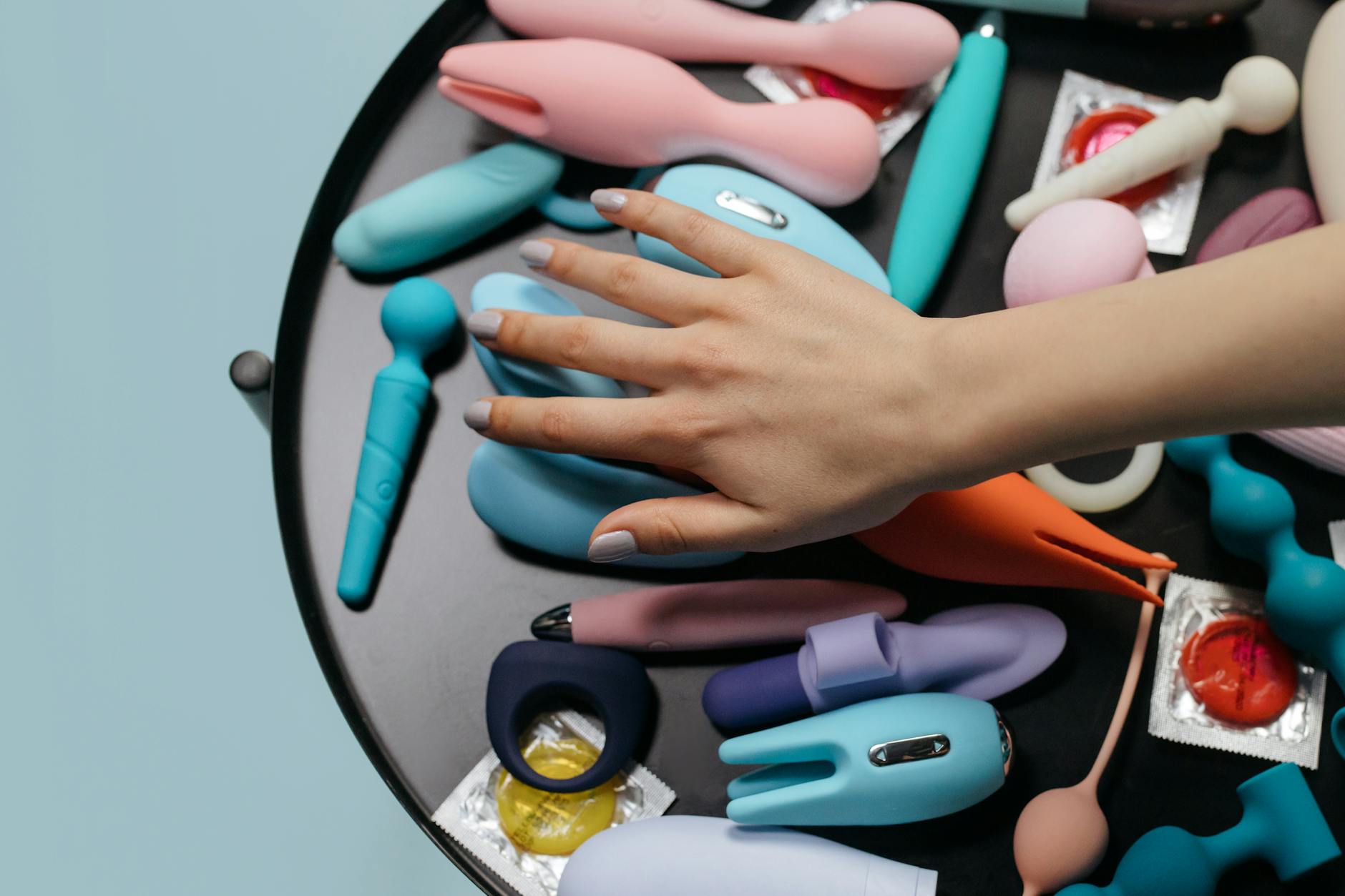
Photo by cottonbro studio on Pexels
When desire comes back with a partner
If your return to pleasure happens within a relationship, the couple work matters. Sometimes one partner's dormancy was actually a signal. A signal that something needed to change. Desire returning doesn't fix that. It just reopens the conversation.
Use the reemergence of pleasure as an opportunity to reconnect with your partner around what you both want. Not just sex. What do you want from each other? What's changed? What needs tending?
If you're introducing a lemon vibrator into partnered sex, frame it as exploration together, not substitution. "I want to feel sensation in a new way. Will you explore this with me?" Most partners find this vulnerable and intimate if it's presented that way.
Sometimes the return of desire means you realize the relationship isn't what you need anymore. That's valid too. Pleasure returning can clarify a lot of things. Don't panic if it does.
Managing expectations around orgasm
Here's a common trap: you feel desire again, you try a lemon vibrator, and you expect an orgasm to prove that you're "back." That pressure kills the whole thing.
Orgasm might not come right away. Or it might come differently than it did before. Or it might not be the point at all. The point is sensation. The point is your nervous system learning that pleasure is available again. The point is you spending time with yourself without performance pressure.
Some of my clients don't have an orgasm for months into their return to desire. Then one day it happens almost by accident. Others find that orgasm feels different but equally good. Some discover that what they want now is pleasure without orgasm. All of these are fine.
When to bring in support
If desire returns but pain shows up, see a pelvic health physical therapist. Dormancy can cause pelvic floor tension or tissue changes that benefit from professional attention.
If shame or trauma is blocking the process, a therapist who specializes in sexual recovery can help you move through that. There's no shortcut through the emotional part.
If you've been on medications that suppress desire (antidepressants, hormonal birth control, others), a conversation with your prescriber might help. Sometimes adjustments are possible. Sometimes they're not, and you work with what you have. Either way, professional input matters.
The timeline is yours
You might spend two months gently exploring before you feel fully back in your body. You might take six. You might find that what "back" means is different from what it meant before. All of this is normal.
Your body kept you safe during the dormancy. It knows when to reengage. Trust that timeline. Trust your own signals. A lemon vibrator is just a tool to support what's already beginning to happen inside you.
FAQ
What if I feel nothing the first time I use a lemon vibrator after a long pause?
Nothing to worry about. Dormancy means your nervous system isn't expecting sensation. One session won't rewire that. Use it again in a few days. Your body is learning that pleasure is on the table again. That learning takes repetition. If you feel nothing after 4-6 consistent sessions, reach out to a pelvic health provider or sex therapist.
Can I use a lemon vibrator with my partner if I feel awkward about it?
Yes, but the awkward part is worth talking about first. What specifically feels awkward? Is it vulnerability? Shame? Fear of judgment? Each of those needs its own conversation. Once you untangle it, bringing a lemon vibrator into partnered touch often feels more intimate, not less. It's just you asking for what you need.
Is it normal for pleasure to feel different after a long break?
Completely normal. Your body has changed. Your neural pathways have quieted. Your preferences might have shifted. Give yourself grace to explore what pleasure looks like now, not trying to resurrect what it was before. Sometimes it's better. Sometimes it's just different. Both are okay.
How long does it take before orgasms feel easy again?
That's individual. Some people orgasm within weeks of returning to practice. Others take months. Some find that orgasm isn't the goal anymore, and that changes everything. There's no timeline you should be on. Your timeline is the right one.
Should I use a lemon vibrator solo first, or with my partner?
Solo first, usually. That lets you understand your own body without performance pressure. Once you feel comfortable with solo exploration, partnered use often feels more natural. But some couples prefer to explore together from the start. There's no rule here, just what serves you both.
What if my partner isn't interested in me using a lemon vibrator?
That's a relationship conversation, not a toy conversation. Why is your partner resistant? Is it insecurity? Discomfort with toys generally? Feeling replaced? Each reason needs different attention. How to Use Lemon Vibrators When Your Partner Isn't Interested in Toys walks through that more deeply.
What you're really doing
Using a lemon vibrator when desire is returning isn't just about the device. It's about you saying yes to yourself again. It's about your nervous system getting the signal that you're safe, you're worth time, and pleasure is something you deserve to explore. That matters more than any orgasm. The device is just the vehicle. You're the whole point.