Let's name what's actually happening
You've been on antidepressants for months or years. The medication works. Your mood is stable, your anxiety is manageable, your life feels livable again. And then you notice: sex feels like it's happening to someone else. Orgasms, if they arrive at all, feel distant. Arousal takes forever. Touch that used to light you up barely registers.
This isn't your imagination, and it's not a character flaw. About 40-60% of people taking SSRIs report sexual side effects, and dulled sensation is among the most common. The medication is literally doing what it's designed to do: dampening your nervous system's reactivity. Which is brilliant for anxiety. Terrible for pleasure.
Here's the good news: sensation can come back, and tools like the Lem are specifically designed to work when your body needs more intensity to register anything at all.
Why antidepressants dull sensation in the first place
SSRIs work by increasing serotonin availability in your brain. That's fantastic for mood regulation. But serotonin also plays a role in sexual response. It affects dopamine pathways (which drive desire), nerve sensitivity, and the brain's ability to register physical stimulation as pleasurable.
Think of it like turning down the volume on all sensory input. Your body is less reactive across the board. You might notice you're less sensitive to pain (good), but also less sensitive to touch, vibration, and subtle sensation (less good for pleasure).
The neurological shift happens gradually. Many people don't connect the dots between their medication and the change in sensation. They assume their body has simply stopped responding, or that they've lost interest in sex entirely.
The difference between desire and sensation
Here's a critical distinction that most people miss: antidepressants usually don't kill desire. They dull sensation and orgasmic intensity.
Desire lives in your brain and your hormones. Sensation lives in your nerve endings and your brain's ability to interpret touch as pleasure. Those are different systems, and they get affected differently.
You might still want sex, still think your partner is attractive, still feel connected. But when you touch yourself or they touch you, the feedback loop feels broken. Your brain isn't receiving the signal that this is supposed to feel good.
This is why standard advice like "talk to your partner more" or "relax" often doesn't help. The problem isn't psychological. It's neurological.
Why lemon clitoral vibrators work better when sensation is muted
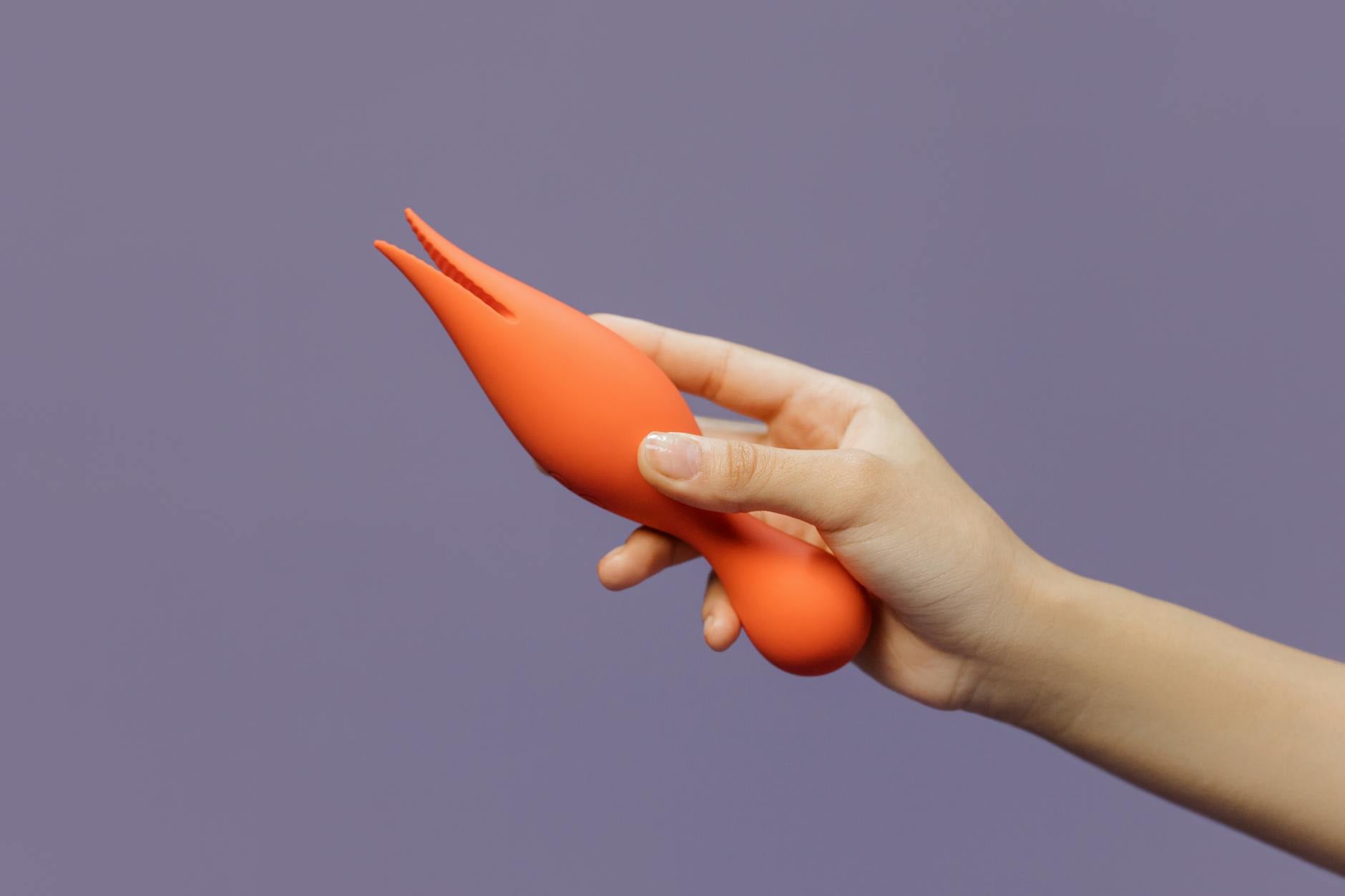
A lemon vibrator operates through suction and pulsing patterns rather than simple vibration. This creates multiple types of stimulation simultaneously: pressure, rhythm, and targeted intensity. When your nervous system is dampened, you need more signal to register pleasure.
The Lem's suction mechanism is particularly effective because it stimulates nerve clusters without relying on subtle touch. It's louder, in a sensory sense. Your nervous system can actually pick it up.
Standard vibrators rely on surface vibration, which is the kind of sensation antidepressants most commonly suppress. Clitoral vibrators that use air-suction technology bypass that problem. They're almost shock-proof in their ability to cut through dampened sensation.
Many of my clients report that lemon adult toys are the first thing they've felt intensely in months or years. That's not coincidence. It's physiology.
Starting with the right intensity settings
When sensation is muted, your instinct is often to crank it to maximum. Resist that.
Start at pattern 2 or 3 on the Lem. Spend 10-15 minutes exploring what you can actually feel at lower intensities before moving up. This serves two purposes. First, it gives your nervous system time to adjust and wake up. Second, it prevents the pounding fatigue that comes from immediately going all-in on high intensity.
You're essentially retraining your body to register sensation. That takes time. Many people report that after 5-10 sessions, even pattern 2 starts to feel more satisfying. The sensation isn't getting stronger. Your nervous system is learning to receive it again.
Once you've spent a week or two at lower patterns and you feel something building, increment by one pattern. Give yourself another week. This isn't slow because I'm being cautious. It's slow because your nervous system actually works faster when you respect its current state.
Combining the Lem with extended warmup
Antidepressants slow arousal buildup. Your body needs more time to register that something pleasurable is happening.
Instead of jumping straight to the toy, spend 15-20 minutes warming up first. This might look like reading erotica, watching something that turns you on, touching yourself without any agenda beyond noticing what you can feel, or simply sitting with fantasies.
The goal isn't to orgasm during warmup. It's to activate your arousal system so your body is primed and listening when you introduce the Lem.
Then use the toy for 15-30 minutes rather than 5-10. Your nervous system may need that length of time to build momentum. Orgasms, when they arrive, often feel more genuine after extended stimulation because the entire system has time to engage.
The pelvic floor factor most people miss
When sensation is muted and you're trying hard to achieve orgasm, your pelvic floor often clamps up. Tension creates less sensation, which creates more tension. It becomes a feedback loop that kills pleasure.
Before using the Lem, spend 2-3 minutes deliberately relaxing your pelvic floor. Not Kegels. The opposite. Breathe into your pelvic floor like you're releasing tension on the exhale.
You can do this lying down with one hand on your belly, one on your pelvic floor area, and just breathe. Tense on the inhale, release on the exhale. Three minutes. That's it.
When you use the Lem afterward, your body can actually receive the sensation instead of bracing against it. This single shift is often the difference between a tolerable experience and a genuinely pleasurable one.
What to discuss with your prescriber
If dampened sensation has been happening for months and it's significantly affecting your quality of life, bring it up at your next appointment. There are options.
Some antidepressants have lower rates of sexual side effects than others. Bupropion, for example, actually increases dopamine and doesn't typically cause this problem. Your doctor might adjust your timing (taking the medication at night instead of morning sometimes helps), or adjust your dose, or switch to something else.
These conversations feel awkward, but doctors have heard them hundreds of times. They're not going to judge you. Sexual function is part of overall health.
That said, switching medications or timing isn't always practical or advisable. Sometimes the medication that's helping your mental health is the one you're on. In that case, lemon sexual toys combined with the adjustments above often becomes your best path forward.
The timeline for improvement
If you've been on antidepressants for a while, sensation isn't going to fully return overnight. But many people report tangible improvement within 4-8 weeks of consistent use combined with the extended warmup and pelvic floor work.
Some improvement is often noticeable in the first few sessions. That's your nervous system recognizing a strong enough signal. Full restoration takes longer because your nervous system is essentially relearning what pleasure feels like.
Se patient with the timeline. This isn't laziness. It's how neurological adaptation actually works.
When it's time to explore more
Once sensation starts returning, you can experiment with different patterns on the Lem or introduce other types of stimulation. But the foundation is getting your baseline sensitivity back online first.
Many of my clients find that once they've rebuilt sensation with a lemon clitoral vibrator, their overall responsiveness improves. Partnered sex feels different. Masturbation feels different. Touch feels like it means something again.
If you're in a relationship, inviting your partner into this process can deepen things significantly. Not in a performance way. Just in acknowledging that your nervous system needs something different right now, and that's okay. That clarity often strengthens intimacy more than trying to hide the issue and push through.
FAQ: Antidepressants, sensation, and pleasure
How long does it take for antidepressants to cause sexual side effects?
Typically within the first 1-4 weeks. Some people notice immediately, others over a month or two. Once established, it usually persists as long as you're on the medication unless you make adjustments.
If I switch antidepressants, will sensation come back immediately?
No. It can take 2-4 weeks after stopping the original medication for your system to recalibrate, and another 2-4 weeks after starting a new one for full adjustment. But switching can absolutely help if the side effects are severe.
Can I use lemon vibrators if I'm on multiple medications?
Generally yes, but if you're on other medications that affect sensation (certain blood pressure meds, nerve pain medications), mention that to your doctor. There are no known dangerous interactions between lemon clitoral vibrators and common antidepressants, but context matters.
Does masturbation with a lemon vibrator feel different than partnered sex when you have dulled sensation?
Often yes. With a toy, you control the intensity and rhythm entirely. With a partner, there's negotiation and unpredictability. Some people find toy-based pleasure comes back faster because it's fully in their hands. Once that's established, partnered sensation sometimes follows.
What if I try the Lem and still feel nothing?
Give it 3-4 sessions at lower patterns with extended warmup before concluding it's not working. If after that you're still not feeling anything, check in with your prescriber about whether a medication adjustment makes sense. Some people need to address the underlying medication issue to see significant change.
Is it normal to feel guilty about needing a toy to have pleasure when I'm on antidepressants?
Completely normal and completely unnecessary. Your body needs a tool right now because a medication is affecting your nervous system. That's not weakness. That's problem-solving. The goal is pleasure and connection, not achieving it a particular way.
The bigger picture
Taking care of your mental health matters more than any single aspect of sexual function. If an antidepressant is keeping you stable and present, that's the priority. But you also deserve pleasure, sensation, and a body that feels like yours.
The combination of lemon vibrators, extended warmup, pelvic floor awareness, and potentially a conversation with your prescriber creates pathways back to sensation. Not around the medication. With it.
Your pleasure isn't gone. It's dampened. And dampening responds to the right intensity, the right approach, and time. Start low, go slow, and trust that your nervous system can wake back up.