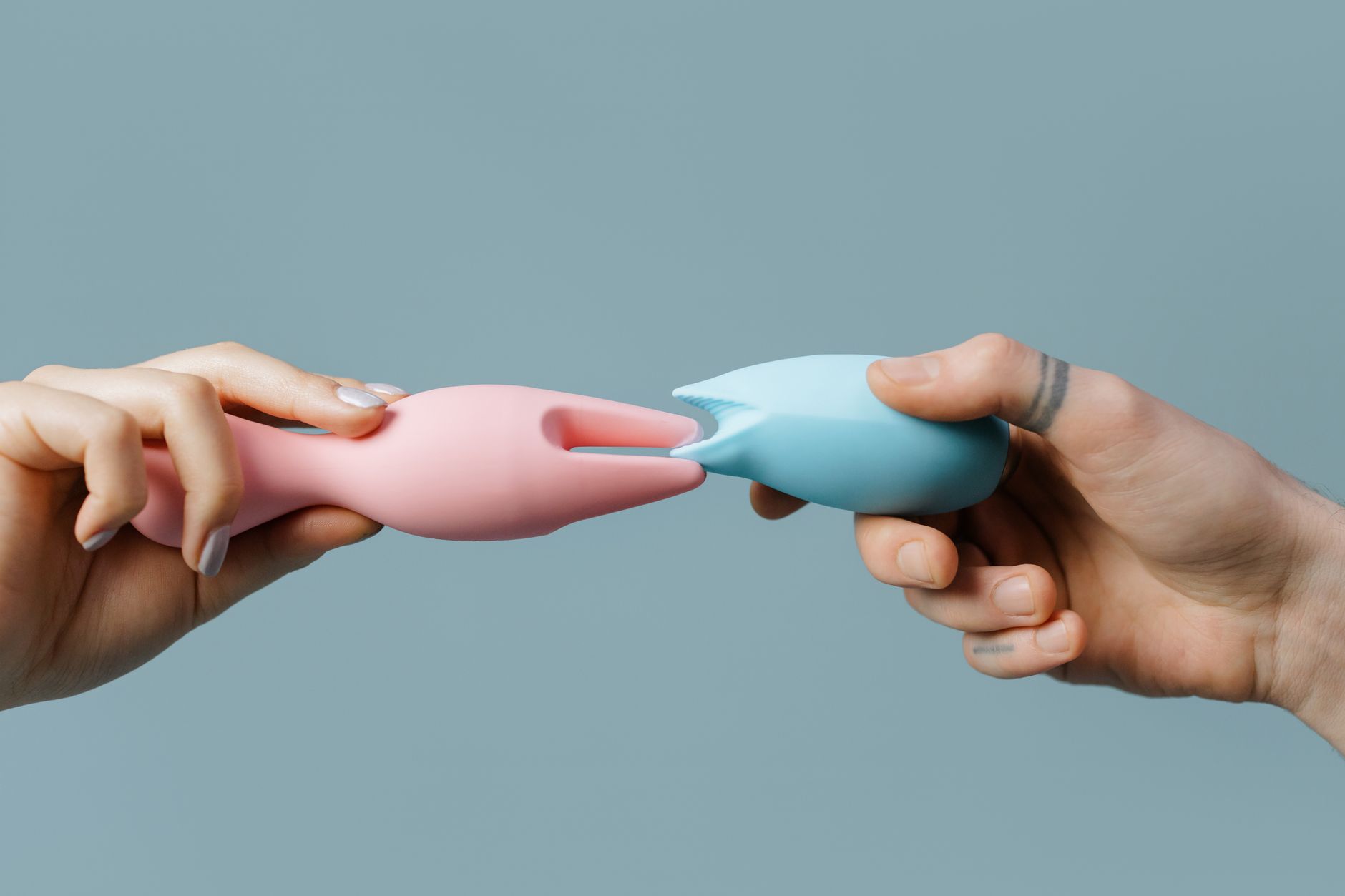
Let's name the thing nobody wants to say
You're lying there, pants off, and suddenly your brain does this: it zooms out like a camera and starts narrating what you look like from above. Your thighs. Your belly. The angle of your legs. And just like that, you're gone. Not physically, but mentally. The pleasure evaporates because you're watching yourself instead of feeling yourself.
This is not a you problem. This is what happens when you've spent decades being taught that your body exists to be looked at, not felt from the inside. That's the actual barrier. And it's one a lemon clitoral vibrator can help you rebuild.
Here's the science: the moment you start self-monitoring (watching your body with a critical eye), your parasympathetic nervous system drops offline. You literally cannot be both aroused and self-conscious at the same time. Your brain picks one. And if body shame has a louder voice, it wins. The vibrators you use for solo pleasure, like the Lem Vibrator, are tools to tip the balance back toward sensation and away from surveillance.
Why your body image anxiety shows up in bed
It's not random that this happens during sex or self-pleasure. Vulnerability amplifies everything. You're naked, exposed, probably not in control of how your body moves or looks in that moment. If you've internalized a lot of criticism (your own, a partner's, society's), that's when it all rushes back.
The brain is trying to protect you. It thinks: "If I watch my body closely enough, I can catch any flaw before anyone else does." It's hypervigilance dressed up as vanity. That doesn't make it less annoying, but it does make it treatable.
When you bring in a tool like a lemon sexual toy, you're introducing a third thing into the experience: sensation that's so localized, so specific, that it's hard to zoom out. The Lem Vibrator's air-suction technology delivers stimulus directly to nerve-dense tissue on the clitoris. It demands your attention. Not in a distracting way, but in a grounding way.
The permission structure that actually works
Here's what I tell people who are stuck on this: your body doesn't need to look a certain way for your nervous system to register pleasure. This is not poetic. This is literal biology. Your clitoris has 8,000 nerve endings. Your thighs have nerve endings. Your skin, your breathing, your heartbeat. All of that hardware is indifferent to what your body looks like. It only cares about stimulation.
When you use a lemon vibrator for solo play, you get to practice separating the two. You get to feel good without anyone watching. And crucially, you get to notice that the pleasure is real and it isn't dependent on how you look right now.
Start small. Maybe it's five minutes with a lemon clitoral vibrator in a dark room, eyes closed, nothing else. No mirror, no reflection in the window, no tracking what your body is doing. Just sensation. You're literally retraining your brain to tolerate pleasure without the running commentary.
Using sensation to interrupt the loop
The Lem Vibrator, like all quality lemon adult toys, has multiple patterns and intensities. Use that design feature intentionally. When you notice the self-conscious voice creeping in, switch patterns. Move to a different intensity. Your brain can't do two complex things at once, so if you're actively paying attention to changing stimulation, you're not simultaneously critiquing your appearance.
This sounds simple because it is. And it works because it's rooted in how attention actually works, not in positive affirmations or body acceptance work (which has its place, but won't help you right now, in the middle of wanting to orgasm).
Keep the session short at first. Fifteen minutes, tops. You're building a new neural pathway where pleasure doesn't require surveillance. Each time you do it, that pathway gets stronger. The self-critical voice gets quieter, not because you've convinced yourself you look good, but because your nervous system has concrete evidence that pleasure and self-consciousness can't coexist.
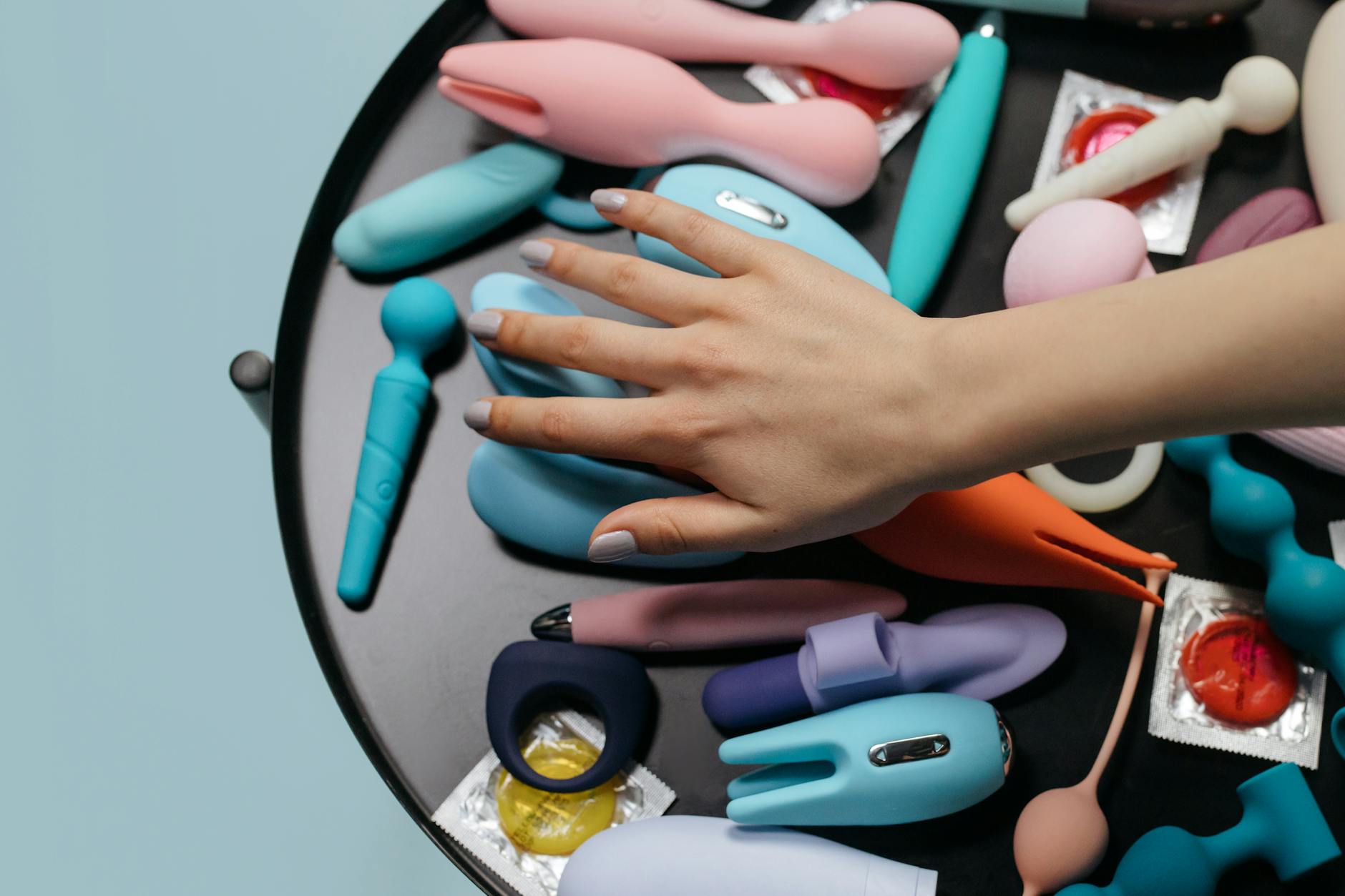
Photo by cottonbro studio on Pexels
What to do if a partner is involved
If you're with someone, this gets more complex because there's an actual other person present. Body self-consciousness with a partner is different from solo self-consciousness. You're not just worried about being watched; you're worried about being judged by someone whose opinion matters.
The conversation to have before anything happens is this: "When I feel self-conscious, I turn inward. I want to use a clitoral vibrator because it helps me stay present instead of zooming out. I'm not doing this because of you. I'm doing it for me. And I'd rather do this than pretend pleasure is happening when it's not."
Most partners get it immediately. Some need time to process (their own insecurity might be showing up). A lemon vibrator used together, with both of you focused on the sensations instead of the visuals, can actually deepen intimacy. You're both leaning into what feels good instead of managing an image.
What doesn't help: using a vibrator as a way to perform pleasure that's not actually happening. That just layers inauthenticity on top of shame. The point is to actually feel good again.
The practical setup that removes friction
Environment matters more than people think. Here's what works:
Dim lights or darkness. Not because your body is wrong in brightness, but because your brain's critical voice gets louder when there's more visual input. Remove mirrors from your sightline. Wear something that makes you feel held or comfortable (loose shirt, underwear, whatever). You're not performing for anyone. You don't need to be maximally undressed.
Use lube. Good water-based lubricant removes friction and makes everything feel better faster. Faster = less time for anxiety to build. The Lem Vibrator works beautifully with water-based lube, and it also increases sensation, which helps you stay grounded in what you're feeling.
Position matters too. Lying on your back with your hand between your legs, or sitting propped up against pillows. Whatever position lets you relax your pelvic floor and not tense your thighs. Tension amplifies self-consciousness. Relaxation amplifies pleasure.
When self-consciousness is actually something else
There's a difference between normal body image anxiety and something that needs more support. If the self-conscious voice is so loud that no amount of sensation work helps, or if it's paired with numbness or dissociation, that's a signal you might need to talk to a therapist. Pleasure work and psychological work aren't the same thing.
But for most people, the barrier is simpler: they've just never actually practiced staying in their body instead of watching it. A lemon vibrator is one of the best tools for that because it makes staying present feel really, really good.
FAQ: Body image and pleasure
Can using a vibrator actually change how I feel about my body?
It can shift your nervous system's response to your body, which is not nothing. When your body reliably produces pleasure, the critical voice tends to quiet down. Not because you suddenly think you look great, but because your brain has evidence that your body is useful and good at feeling things. That's a meaningful reframe.
Is it normal to feel more self-conscious with a partner watching?
Completely normal. Vulnerability with another person triggers more defensiveness. Having a conversation about it beforehand, and possibly using a lemon clitoral vibrator together where both of you are focused on sensation rather than visuals, often helps. You're building safety in stages.
Should I use a vibrator if I'm worried it means my body isn't good enough on its own?
No tool means your body is insufficient. A vibrator is amplification, not substitution. You can have incredible sensations without one too. But if self-consciousness is blocking pleasure, a vibrator gives you something concrete to focus on instead of your appearance. That's it. That's the benefit.
How long until this gets easier?
Most people notice a shift in three to four sessions of solo play with a lemon vibrator. Not a complete rewrite of body image, but a noticeable loosening of the self-conscious voice during arousal. The more you practice, the more automatic it becomes.
Can I use a vibrator if I have a specific part of my body I hate?
Yes. In fact, starting with something like the Lem Vibrator that's very focused on the clitoris (not the broader vulva or body) can help because your attention is drawn to a specific, intense sensation rather than your whole body. You're giving your brain something small and very good to focus on.
What if I can't stop thinking about how I look even with a vibrator?
That's a sign your nervous system might need a different approach. Grounding techniques can help: notice five things you can see, four things you can touch, three things you can hear. Or try using a vibrator in complete darkness, or with your eyes covered. You're removing the visual channel so your brain can't obsess over appearance.
Body image anxiety is real, and it's a genuine barrier to pleasure. But it's also one of the most responsive barriers to practical intervention. A lemon vibrator, used intentionally in an environment that supports your nervous system, can help you rebuild the foundation: the direct experience of feeling good in your own body, without an audience, without judgment. That changes everything.
If you're stuck in this loop and want support talking through it, reach out. You don't have to white-knuckle your way back to pleasure alone.