
Let's start where you actually are
Recovering from sexual trauma isn't linear. Some days you feel ready to reconnect with pleasure. Other days, the idea of touching yourself feels impossible. Both are completely normal. What matters is that when you do feel ready to explore sensation again, you have tools that prioritize your safety and agency.
Clitoral vibrators like the Lem can be part of that healing journey. But only if you use them deliberately, with full permission from yourself, and with a clear understanding of how to keep the experience grounded.
Why trauma rewires pleasure signals
Sexual trauma doesn't just affect your mind. It literally changes how your nervous system processes touch and sensation. Your body learns to brace, to anticipate threat, to disconnect. Over time, even consensual touch can trigger the same protective responses as the trauma itself.
This is why traditional pleasure advice often backfires for trauma survivors. "Just relax and enjoy" ignores the fact that your nervous system has been conditioned to see sex as unsafe. You can't logic your way out of a physiological response.
Clitoral vibrators work differently because they offer something traditional sexual activity often doesn't: complete control. You control the intensity, the duration, the moment it stops. That control is what slowly teaches your nervous system that pleasure can happen without threat.
The safety-first framework for using lemon vibrators
Before you even touch a vibrator, three things need to be in place.
First: grounding in the present moment. Trauma survivors often dissociate during sensation, which can feel like the experience isn't happening to you. You watch yourself from outside your body. When that happens, stop. Ground yourself using the 5-4-3-2-1 technique: name five things you see, four you can touch, three you hear, two you smell, one you taste. This pulls you back into your body and the present.
Second: a clear yes-or-no answer to this question: Am I exploring this for myself, or because I feel like I should? Healing from trauma means reclaiming your right to say no. If you pick up a vibrator and your gut says "not today," that's a win. You just practiced prioritizing your own needs. Put it down without guilt.
Third: a plan for what happens if touch triggers a memory or flashback. Have water nearby. Have a favorite blanket or something soft within reach. Know that you can stop at any moment. Some people find it helpful to text a trusted friend first and say "I'm going to rest for an hour." Having external accountability sometimes helps.
Starting with the lowest intensity and staying there
Many people jump straight to the highest setting on a clitoral vibrator. That works fine for someone with an untraumatized nervous system. For someone rebuilding pleasure after trauma, it often backfires.
High intensity can feel overwhelming. Overwhelming can trigger a protective response. A protective response can make you feel unsafe in your own body again. Start with pattern one, the gentlest setting, and stay there for several sessions. Your goal isn't an orgasm. Your goal is to prove to yourself that vibration feels good without being jarring.
Many trauma survivors find that the Lem's suction-based design, which stimulates rather than vibrates aggressively, feels safer than traditional clitoral vibrators. There's no sharp intensity spike. The sensation builds gradually. That gradual buildup is what helps your nervous system relax into pleasure instead of tensing up against it.
Sensation mapping without pressure
Here's something I recommend to almost every client recovering from trauma: spend a few sessions just exploring what sensation feels good without the goal of pleasure.
Turn on the vibrator at the lowest setting. Hold it near (not against) your inner arm. Notice: does the vibration feel tingly, soothing, irritating, interesting? Move it around your body. Your neck, your collarbone, the inside of your wrist. See what different areas respond to.
This serves two purposes. First, it teaches your body that sensation can be neutral or pleasant without being sexual. Second, it gives you information about where your body actually feels safe being touched. Many trauma survivors discover that areas they thought were "damaged" actually respond beautifully to gentle stimulation.
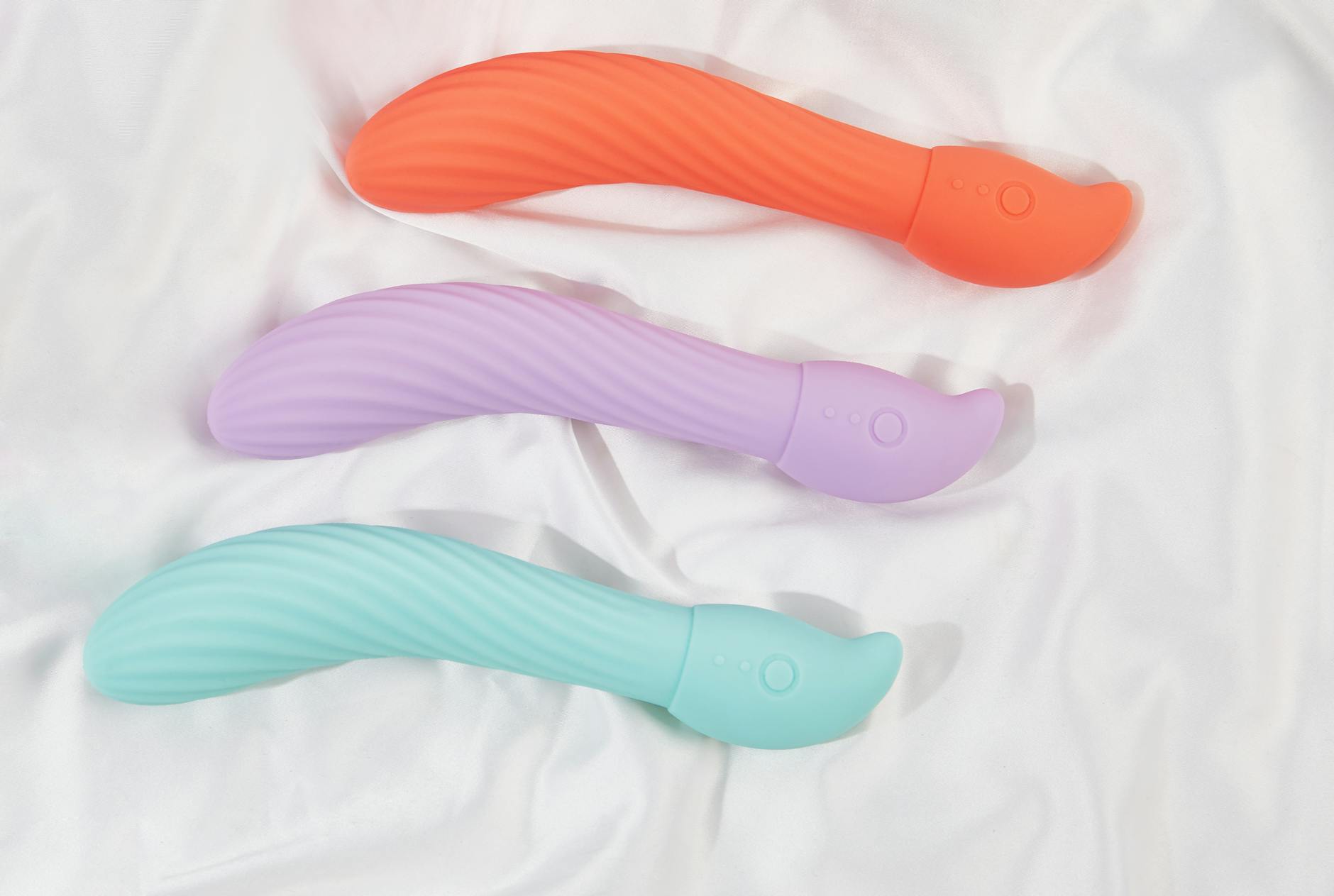
Photo by IFONNX Toys on Pexels
The vulva is the last place you explore, not the first. When you do eventually move there, do it with exactly the same low intensity and no pressure to feel anything specific.
Building a sensory toolkit around the vibrator
Pleasure after trauma isn't just about the physical sensation. It's about feeling safe in the context where pleasure happens. That means building a deliberate sensory environment.
Before you use a clitoral vibrator, set up the space. Dim lighting, or complete darkness if that feels safer. A blanket you love nearby. Maybe a scent you associate with calm: lavender, vanilla, something that isn't sexually charged for you. Some people find that having their phone nearby with a comfort video queued up helps, so if they need to step out of the experience, they have something to ground back into.
One client told me she sprayed lavender on her pillow beforehand. Another kept a specific playlist on repeat. The sensory context became the safety cue. Over time, setting up that environment actually helped her body recognize "this is a safe moment for pleasure."
Music helps some people, silence helps others. What matters is that you choose. You're not following someone else's script. You're writing your own pleasure back into your body.
Why orgasm is the wrong metric for healing
Here's the trap that catches so many trauma survivors: they expect that clitoral vibrators will help them reach orgasm again, and they measure their healing by whether that happens.
Orgasm is not the finish line of trauma recovery. Safety is. Presence is. The ability to touch yourself without dissociating or tensing up is. Some people rebuild pleasure this way and orgasm returns naturally. Others find that their relationship to orgasm has changed permanently, and that's okay too.
One of my clients spent eight months using a lemon vibrator at the lowest setting with zero expectation of orgasm. Then one day, without trying, she came. She cried afterward. Not because the orgasm was transcendent (it wasn't), but because her body had just told her something important: you're safe enough to let go.
That's the real win.
When to pause and work with a therapist
If using a vibrator consistently triggers flashbacks, or if you find yourself dissociating every time, don't push through. Your nervous system is telling you something. Pause the vibrator practice and bring this up with a trauma-informed therapist.
Trauma recovery isn't linear, and sometimes you need professional support to move through a particular threshold. Therapy combined with sensation work is more effective than either one alone. A good therapist can help you understand what's getting triggered and why, so that when you return to pleasure practices, you know what to expect.
Similarly, if you notice that you're using a vibrator as a way to avoid feeling difficult emotions (grief, anger, loneliness), that's worth examining. Healing from trauma means building the capacity to feel hard things. A vibrator can help rebuild pleasure, but it shouldn't become a way to numb pain.
The deeper permission underneath it all
Using a lemon clitoral vibrator after sexual trauma boils down to one thing: giving yourself permission to decide what pleasure means now.
Trauma steals that permission. It tells your body what to feel, when to feel it, and that you don't get a say. Reclaiming pleasure means reclaiming agency. When you pick up a vibrator because you want to, at an intensity you choose, for as long as you want, you're not just having a sensation. You're telling yourself that your body belongs to you again.
That's the real work. The vibrator is just a tool.
Frequently asked questions
Can I use lemon vibrators if I have PTSD from sexual assault?
Yes, but with deliberate care. Start with the lowest setting, focus on sensation mapping in non-genital areas first, and have a grounding plan in place. Many trauma-informed therapists recommend pairing vibrator use with talk therapy, especially early in healing. If you notice dissociation or flashbacks, stop and discuss with a therapist before continuing.
How long does it take for pleasure to come back after sexual trauma?
There's no timeline. Some people notice shifts within weeks of consistent, pressure-free exploration. Others take months or years. What matters isn't speed; it's consistency and self-compassion. Healing isn't linear, and that's completely normal.
Is it normal to feel nothing when using a clitoral vibrator during recovery?
Completely normal. Trauma numbs sensation as a protective mechanism. Feeling nothing doesn't mean you're broken or that the vibrator isn't working. It means your nervous system is still in protection mode. Keep the practice gentle and low-pressure, and sensation often returns gradually. If numbness persists for months, discuss it with a trauma-informed therapist.
What if a vibrator triggers dissociation or a flashback?
Stop immediately. Ground yourself using the 5-4-3-2-1 technique or another grounding method you know works. This is information, not failure. Your nervous system is showing you where it still needs help. Discuss the trigger with a therapist before you try again.
Can using a lemon vibrator help me trust my body again?
It can be part of that process. Consistent, consensual, self-directed touch teaches your body that sensation can be safe. Over time, that can shift your relationship to your own body. But it works best alongside trauma therapy, not instead of it.
Should I tell a partner I'm using a clitoral vibrator during trauma recovery?
That's your call. Some people find that transparency helps rebuild trust in their relationship. Others find that solo exploration feels more healing at first. If you do share, frame it as "I'm rebuilding my relationship with my own body" rather than "something's wrong with our sex life." This is about you, not about your partner's performance.
Moving forward at your own pace
Recovery from sexual trauma isn't about returning to how pleasure felt before. It's about discovering what pleasure feels like now, in a body that's been through something difficult, with boundaries you've learned to respect.
Clitoral vibrators can help with that. But the real work is the permission you're giving yourself to explore sensation without pressure, to say no without guilt, and to believe that your pleasure matters. If you're struggling with where to start or how to move through resistance, reach out. A therapist or counselor specializing in trauma recovery can provide personalized support for your healing journey. You don't have to figure this out alone.
Your body is worth reconnecting with. Take it slow.