
Okay, let's talk about the thing nobody wants to ask their gynecologist
You've just had a procedure—a hysterectomy, an endometrial ablation, cervical treatment, fibroid removal, something in that territory. The discharge papers say "no intercourse for six weeks." What they don't say is what happens after those six weeks, or more importantly, what you're allowed to do before you're cleared for intercourse. Spoiler: pleasure doesn't have to wait that long.
The silence around post-procedure sexuality is real, and it's frustrating. You're told to rest, heal, avoid tampons, and basically pretend your body doesn't want anything. But your body does want things. You want to know when it's safe. You want to know what safe actually means. And honestly, you deserve that information from someone who isn't going to make it weird.
What actually happens during healing (the timeline)
Your surgeon removes sutures or allows incisions to close. Your uterus, cervix, or pelvic organs are reshaping. Inflammation goes down. Blood vessels re-establish. Nerve endings wake back up. All of this takes time, and the timeline differs wildly depending on what was done.
A hysterectomy takes roughly eight to twelve weeks before the pelvic floor is genuinely stable. An endometrial ablation (burning the uterine lining) or a dilation and curettage can clear to sexual activity in as little as two to three weeks, though your gynecologist will give you a specific date. The rule of thumb: penetrative sex isn't safe until your doctor clears it, because the cervix is a highway to the surgical site, and introducing bacteria or putting pressure on fresh tissue invites infection or bleeding.
But here's what's often missed in those discharge papers: external pleasure is a different category entirely.
Your clitoris sits outside the surgical zone for most gynecological procedures. The nerve pathways are intact. The tissue isn't healing from surgery. There is no medical reason you can't have an orgasm—external stimulation, no penetration—as soon as you feel physically ready, which for many people is week two or three.
Asking your doctor about this is worth it. Most will tell you the truth: external stimulation is fine once pain and heavy bleeding have subsided.
Why lemon clitoral vibrators are a gentle choice during recovery
Let's say you're cleared, or you've talked to your doctor and gotten the green light. What tool should you use?
Traditional vibrators, the ones that buzz and rattle and send vibrations deep into tissue, can feel overwhelming on sensitive post-procedure skin. They can also trigger pelvic floor tension if your muscles are still guarding against pain.
Lemon vibrators—specifically air-suction clitoral vibrators like the Lem by Hello Nancy—work differently. They use gentle, rhythmic suction instead of vibration, which creates a sensation of pressure and release rather than a constant hum. This is mechanically gentler. It doesn't require tight contact. It focuses stimulation on the clitoris without radiating sensation through the whole pelvic floor.
For post-procedure bodies, that precision matters. You get the orgasm you're missing without triggering inflammation or overloading nerve endings that are still coming back online.
The recovery-specific setup that actually works
Three things change when you're using a lemon clitoral vibrator post-procedure:
Start with the lowest setting. On the Lem, that's patterns one through three. These aren't weak—they're just not overwhelming. You can always increase. You can't easily un-overstimulate.
Budget more warm-up time. Healing changes your arousal timeline. Your body is redirecting energy to healing; it has less bandwidth for quick arousal. Spend twenty to thirty minutes on non-genital touch—massage, kissing, whatever feels good—before you bring the vibrator in. This lets blood flow back to the area, makes sensation feel richer, and honestly just feels good.
Stop the second anything feels off. Not during—after. If you notice spotting, cramping, or increased discharge in the hours after, your tissues aren't ready yet. That's information, not failure. Wait another week and try again.
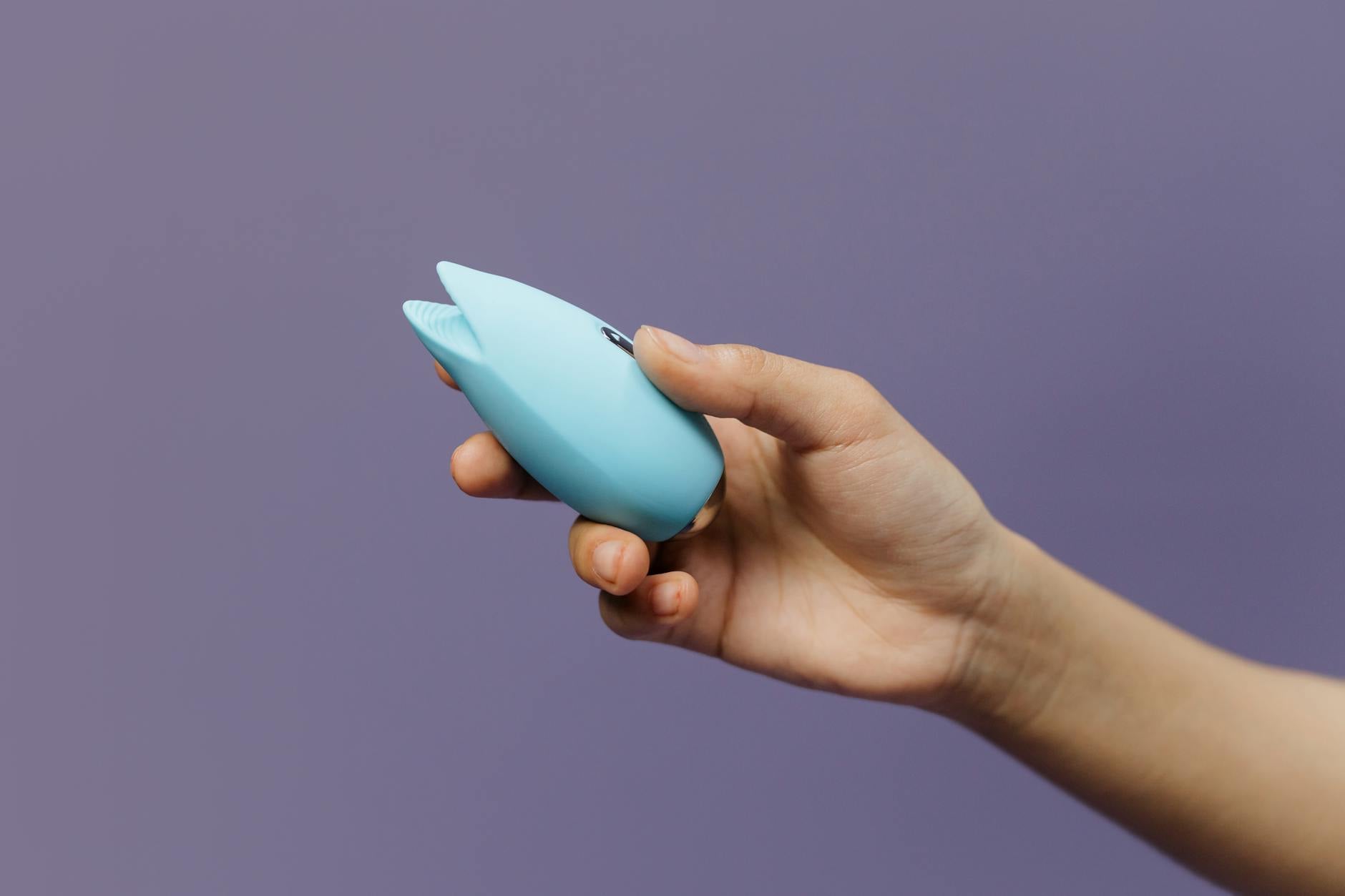
Photo by cottonbro studio on Pexels
The pelvic floor piece (often overlooked)
Here's something that rarely gets mentioned: your pelvic floor muscles have been through trauma, even if the procedure didn't directly touch them. They've been tense, protecting, bracing. They're probably tired.
When you use a vibrator post-procedure, especially a lemon vibrator, you're not just chasing pleasure. You're also teaching your pelvic floor that sensation is safe again. You're reestablishing the neural pathways between stimulation and relaxation. You're literally retraining your body's response to pleasure.
That's a healing act, not just a pleasure act.
If you notice your pelvic floor is gripping hard during stimulation, that's normal. Don't fight it. But do spend thirty seconds afterward consciously relaxing—imagine releasing everything below your belly button. Breathe. Let your muscles settle. This counteracts the natural guarding reflex and helps your nervous system understand that pleasure is safe.
When to hold off (and when to call your doctor)
There are specific scenarios where you should wait longer, regardless of what you've read online.
If you're still having heavy bleeding past week two or three, wait. Increased blood flow to the area can restart bleeding, and you want that to fully resolve first. If you're on antibiotics, wait until you've finished the course. If you're experiencing ongoing pain or pressure, that's a sign tissues are still acutely inflamed.
Call your doctor immediately if you experience sudden heavy bleeding, sudden sharp pain, fever, or significant spotting after sexual activity. These aren't automatic dealbreakers—they might just mean you tried too soon—but they need medical eyes.
The emotional part (equally important)
Physical healing is half the story. The other half is psychological.
Many people describe post-procedure sexuality as feeling distant from their body. You've been touched by surgeons, examined, had something removed or altered. Your body doesn't feel entirely yours yet. The idea of pleasure can feel dissonant with that experience.
Using a clitoral vibrator—especially one designed with thought and care—can be an act of reclamation. You're choosing this. You're deciding when, how, at what intensity. You're being present with sensation again. That's powerful reestablishment of ownership.
If you have a partner, this is worth discussing. Let them know what you're doing and why. Some partners feel left out; some feel relieved that there's a clear path back to intimacy that doesn't require them to guess what's okay. Transparency here prevents a lot of weird tension.
Moving from recovery to regular use
At some point—usually six to eight weeks post-procedure, though ask your doctor for your specific timeline—you'll be fully cleared for penetrative sex if you want it. The recovery phase officially ends.
This is when something interesting often happens: people who started using a lemon vibrator during recovery find that they want to keep using it. Not instead of partnered sex, but alongside it. The air-suction sensation feels distinctly different than penetration. It's a different kind of pleasure. And that's completely normal. You've discovered a tool that works for your body. You get to keep using it.
Why Lemon Vibrators Work Better for Sensitive Clitorises covers this in more depth, but the short version is: once your body has healed, you understand what your specific nerve endings like. Honor that.
FAQ: Recovery and lemon vibrators
How soon after surgery can I use a lemon clitoral vibrator?
This depends entirely on your specific procedure and your surgeon's sign-off. For minimally invasive procedures like endometrial ablation or hysteroscopic surgery, many surgeons give the green light for external stimulation in weeks two to three. For more invasive surgery like hysterectomy, you'll typically wait longer. Always ask your surgeon directly. They'll give you a timeline for external stimulation separately from the timeline for penetration.
Will orgasms during recovery hurt the surgical site?
No, not if your surgeon has cleared you for external stimulation. The clitoris sits outside the surgical zone for most gynecological procedures. The muscles that contract during orgasm—including the pelvic floor—are part of healing, not hindering it. The contraction is gentle, brief, and actually promotes blood flow. What you want to avoid is putting direct pressure on the surgical site, which is why penetration has a later timeline.
Can I use a regular vibrator during recovery, or do I specifically need a lemon clitoral vibrator?
You can use any vibrator you already own, but air-suction vibrators like lemon vibrators are gentler on sensitive, recovering tissue. They don't require firm contact, they focus stimulation narrowly on the clitoris, and they work through suction rather than constant vibration, which some people find less overwhelming. If you're buying specifically for recovery, a lemon clitoral vibrator is worth the investment. If you already have something, start on the lowest setting and pay attention to how your body responds.
What if I have spotting after using a vibrator during recovery?
Light spotting occasionally happens as tissues finish healing. If it happens once and stops, keep an eye on it but don't panic. If it happens every time you use the vibrator, or if it's heavy spotting (like soaking a pad in an hour), stop using the vibrator and contact your surgeon. You're not doing permanent damage, but you are stimulating healing tissue in a way that's restarting bleeding, which means it's too soon. Wait another week or two and try again.
Can I use a lemon vibrator with a partner present during recovery?
Absolutely, if that feels right to you. Some couples find it a helpful bridge—your partner is present and involved while you're still in the recovery window where penetration isn't possible. Some people prefer to explore on their own first, to understand what feels good when they're not thinking about their partner. There's no right answer. What matters is that you're communicating.
When should I transition back to partnered sex after using a vibrator during recovery?
When your surgeon clears you for penetration and you feel emotionally and physically ready. Some people are ready at week six. Some take twelve weeks. Some discover that partnered penetration feels different than they remembered—tighter, or more tender, or surprisingly good—and that's all normal. Go slowly, use lubrication (your body might not be producing as much post-procedure), and listen to your body.
Your body deserves pleasure at every stage
Recovery doesn't have to mean a pleasure pause. It means being thoughtful about what your body can handle and when. It means asking your doctor the questions nobody wants to ask. It means choosing tools—like a lemon clitoral vibrator—that work with your healing instead of against it.
You'll be whole again. The timeline will pass. And when it does, you get to decide what pleasure looks like going forward. For many people, that includes the lemon vibrator they discovered during recovery. For some, it's a stepping stone back to the sexuality they knew before. Both are right.
If you have questions about which Hello Nancy product might work best for your body, or if you want to talk through the recovery timeline with someone who gets it, reach out. That's what we're here for.