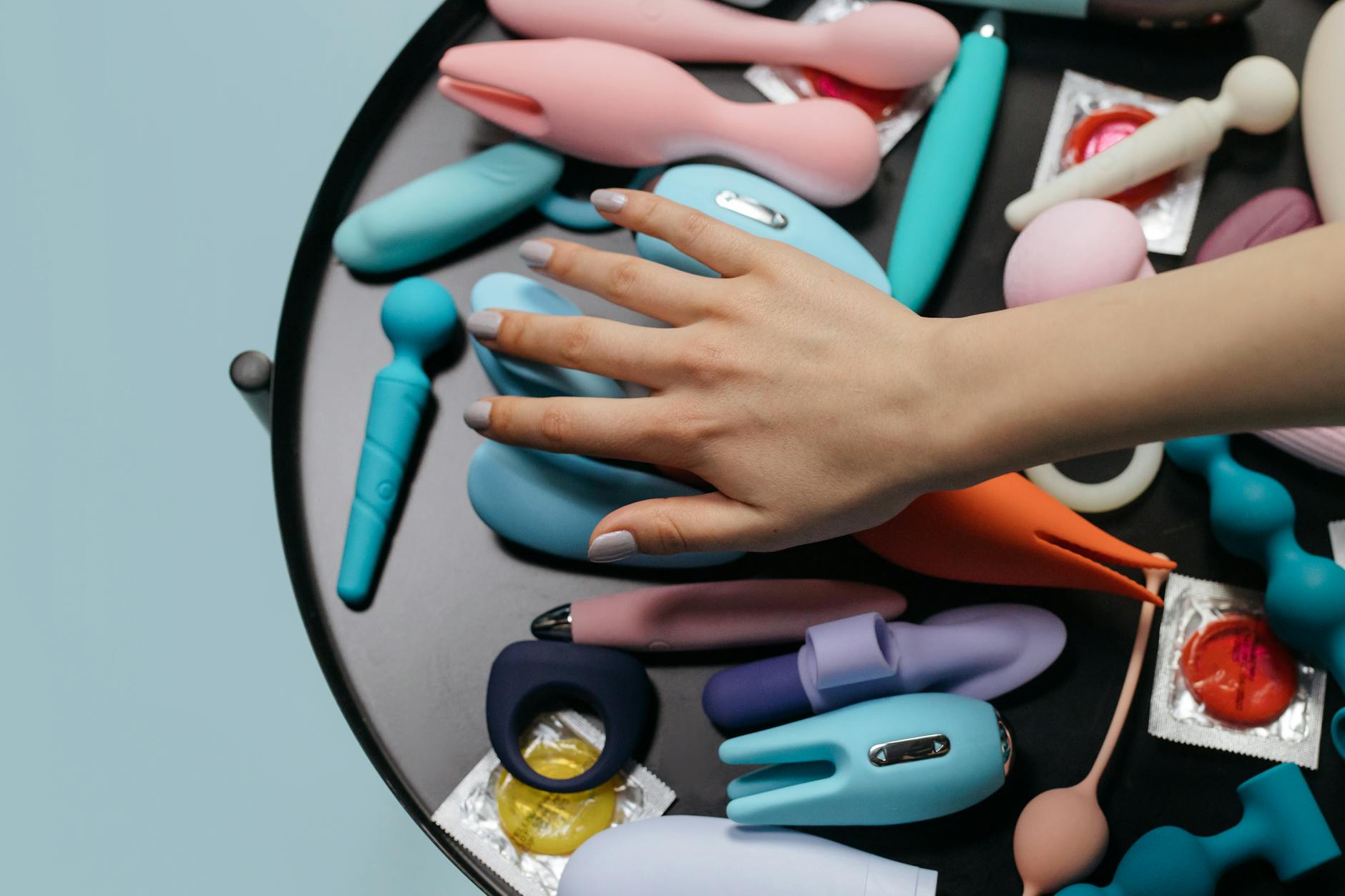
Here's what nobody tells you about vibrator intensity
More power does not equal better orgasms. This is the gap between what people assume and what actually happens in the body, and closing that gap changes everything about how you approach your clitoral vibrator or lemon sexual toy.
I work with people every day who've spent years cranking their vibrator to the highest setting, thinking that's how you get the best outcome. Then they try a lower setting or a different pattern on their lem vibrator, and suddenly they have an orgasm that surprises them. More intense, longer, or just... different in a way that feels better.
Let me explain what's actually happening.
How intensity affects nerve response
Your clitoris has roughly 8,000 nerve endings concentrated in a space the size of a pea. That's wildly sensitive. When intensity goes up on your lemon clitoral vibrator or any adult toy, you're not necessarily stimulating more nerves. You're overstimulating the same nerves.
There's a difference. Here's the mechanics: nerves have a threshold. Below that threshold, they don't fire. At the threshold, they fire consistently. Above the threshold, they can actually become less responsive because they're fatigued. This is why people report needing higher and higher intensity over time to feel anything. You're not losing sensitivity to the toy. You're numbing the nerve endings with sustained overstimulation.
A well-designed lemon vibrator works with this system instead of against it. The Lem, for instance, uses air-suction technology at multiple levels rather than pure vibration intensity. This means you can stimulate the clitoris without the desensitizing effect of constant, heavy vibration. The pattern matters as much as the power.
Why pattern beats intensity
Most people think about vibrators in one dimension: how strong. The orgasm research suggests intensity is roughly 20 percent of the equation. Pattern, rhythm, and build are the other 80.
Think about music. A loud, single note gets old fast. A quiet song with movement, variation, and unexpected turns holds your attention and creates satisfaction. Your nervous system works the same way.
When you use a lemon vibrator or any clitoral toy, varying the pattern tells your nervous system something is happening. Your body responds by staying engaged. A constant, unchanging buzz at maximum intensity is the opposite of engaging. It's white noise for your clitoris.
This is why people with sensitive clitorises often report better orgasms with devices designed around pattern variation (like air-suction or tapping technologies) rather than simple buzzing at high power. You get more sensation data with less physical intensity. Your nervous system has something to work with.
Mental intensity matters more than you think
Here's the part that shifts everything: the strongest orgasm predictor isn't your vibrator power. It's mental engagement.
For couples, this means using your lemon sexual toy with full attention, not as background noise while scrolling. For solo pleasure, it means creating space where distraction is genuinely off the table. Your brain is your biggest sex organ. A 3-setting toy with your full attention will out-perform a 10-setting toy while you're checking your email.
This is also why so many people feel confused about whether their device is "good enough." They're measuring intensity when they should be measuring presence. A lower-power setting can feel incredible if you're fully there for it. The same setting feels mediocre if you're half-present.
Intensity becomes a way to mask inattention. You crank the power because the distraction or the disconnect is easier to override with force than to actually address. I see this a lot with people in relationships where connection has frayed. They're using the toy at maximum intensity because they're not actually in their body.
The orgasm plateau (and how to avoid it)
Most vibrator users hit a wall around 6 to 12 months. The toy stops feeling as good. You assume it's broken or you've adapted to it.
What's actually happened: you've developed a pattern dependency. Your body learned "highest setting equals orgasm," and now lower settings feel ineffective even though they'd work fine if you used them consistently.
The fix is a reset. Lower your intensity by 20 to 30 percent for two to four weeks. Use that level exclusively. Your nerve endings recalibrate. After the reset, the toy feels like you just bought it new. You also regain access to pattern variation and lower-intensity pleasure, which means more flexibility in your sensation.
This is why owning two different clitoral vibrators can be valuable. Not because you need the backup, but because switching between devices prevents adaptation. Your nervous system stays engaged because it's getting varied input.
If you have a lemon vibrator like the Lem or any high-quality clitoral toy, using it at setting 2 or 3 instead of maximum actually preserves your pleasure long-term. This seems counterintuitive. It's not.
Partnered intensity is its own thing
When someone else is controlling the vibrator, intensity becomes social data. They're watching your response. The back-and-forth creates feedback that your solo session doesn't have.
This is why partnered vibrator use sometimes feels easier despite being more vulnerable. The intensity doesn't need to be as high because you're getting aroused from multiple sources: physical sensation, emotional intimacy, attention, novelty. People often orgasm faster and harder with a partner using a lower-intensity setting than they do alone at maximum power.
For couples exploring lemon sexual toys or clitoral vibrators together, I usually recommend starting at setting 1 or 2 and only increasing if someone asks for more. You can always turn it up. You can't unknow what overstimulation feels like.
How to find your actual sweet spot
Here's a practical approach:
Start your next session at the lowest setting. Spend five minutes here, actually paying attention to sensation rather than waiting for results. Notice texture, rhythm, how your body responds. Then move to setting 2. Stay for five minutes. Keep going until you hit a point where increasing intensity doesn't feel better, just different.
That difference point is interesting. It's not your best setting. It's your body telling you that you've hit an intensity ceiling for stimulation quality. Your best setting is usually one or two notches below that.
Try staying at that sweet spot for a week. See what happens. You might find that orgasms are easier, last longer, or feel more varied. You might also discover that you prefer different intensities on different days depending on your cycle, stress, or just how your body is feeling.
This is the information that matters. Not the maximum power of your vibrator. Not what other people use. What your nervous system actually responds to.
The pleasure permission thing
Lowering intensity often feels like settling. It doesn't. It feels like settling because you've internalized a belief that more equals better. This belief lives everywhere. More money, more productivity, more intensity in pleasure.
It's not true for sex. The science on why lemon vibrators work better for sensitive clitorises shows that reduced intensity with pattern variation often produces superior results to maximum power alone.
Giving yourself permission to prefer a lower intensity means trusting your own body over assumptions about how pleasure "should" work. That's the hardest part. The vibrator itself is easy.
FAQ
Can intense vibration actually damage nerve endings?
Not permanently, but sustained high-intensity vibration can lead to temporary desensitization. This is why people report needing increasingly higher power over time. The nerve endings aren't damaged. They're fatigued. A reset period using lower intensities for two to four weeks usually restores full sensitivity.
Is there a difference between vibration intensity and pattern intensity?
Absolutely. Vibration intensity is just power. Pattern intensity is about rhythm variation and complexity. A lemon clitoral vibrator using air-suction technology can create high pattern intensity at low vibration power. This is why many people find air-suction devices more pleasurable long-term than traditional high-power vibrators.
Why do some people need maximum intensity to orgasm?
Sometimes it's genuine nerve density variation. More often, it's a learned pattern. If someone has always used high intensity, their nervous system has adapted to expect it. Lower intensity feels insufficient not because it is, but because their body hasn't learned to respond to it. A gradual intensity reset can fix this.
Does the intensity matter less as you get older?
Not necessarily less. It matters differently. After hormonal changes like menopause, tissue sensitivity shifts and arousal takes longer, but many people find they actually prefer lower intensity because it's less irritating. How lemon vibrators work best after hormonal changes covers this in detail.
What's the fastest way to reset vibrator tolerance?
Completely stop using your current device for one week. Then restart at the lowest setting for two to three weeks before gradually increasing. Alternatively, switch to a different device or type of stimulation (like air-suction if you've been using traditional vibration). The novelty itself helps reset tolerance.
Can you use too low of an intensity?
Yes, but rarely. Most people find a sweet spot in the lower to mid range. Going below that just means nothing happens. If you're at setting 1 and feeling nothing, either your device needs charging, or setting 2 is your actual baseline. There's no risk in low intensity. There's just a functional floor where sensation becomes too subtle to register.
The real question is presence, not power
Intensity matters. But not the way you've probably been thinking about it. The orgasm quality research is clear: variation, attention, and sustainable nervous system engagement beat raw power every single time.
Your best orgasm isn't waiting at the highest setting. It's waiting at the setting where you feel the most, notice the most, and stay present the most. For most people with lemon vibrators or any quality clitoral toy, that's somewhere in the middle of the range.
Start lower than you think you need to. Pay attention. Notice what your body actually wants instead of what you assume it should want. That's where the real pleasure lives.
If you're still figuring out what device works best for you, our complete buying guide walks through how different clitoral vibrators affect sensation and intensity in ways that might help you choose. And if you have questions about how intensity interacts with your specific body or situation, we're here to help.