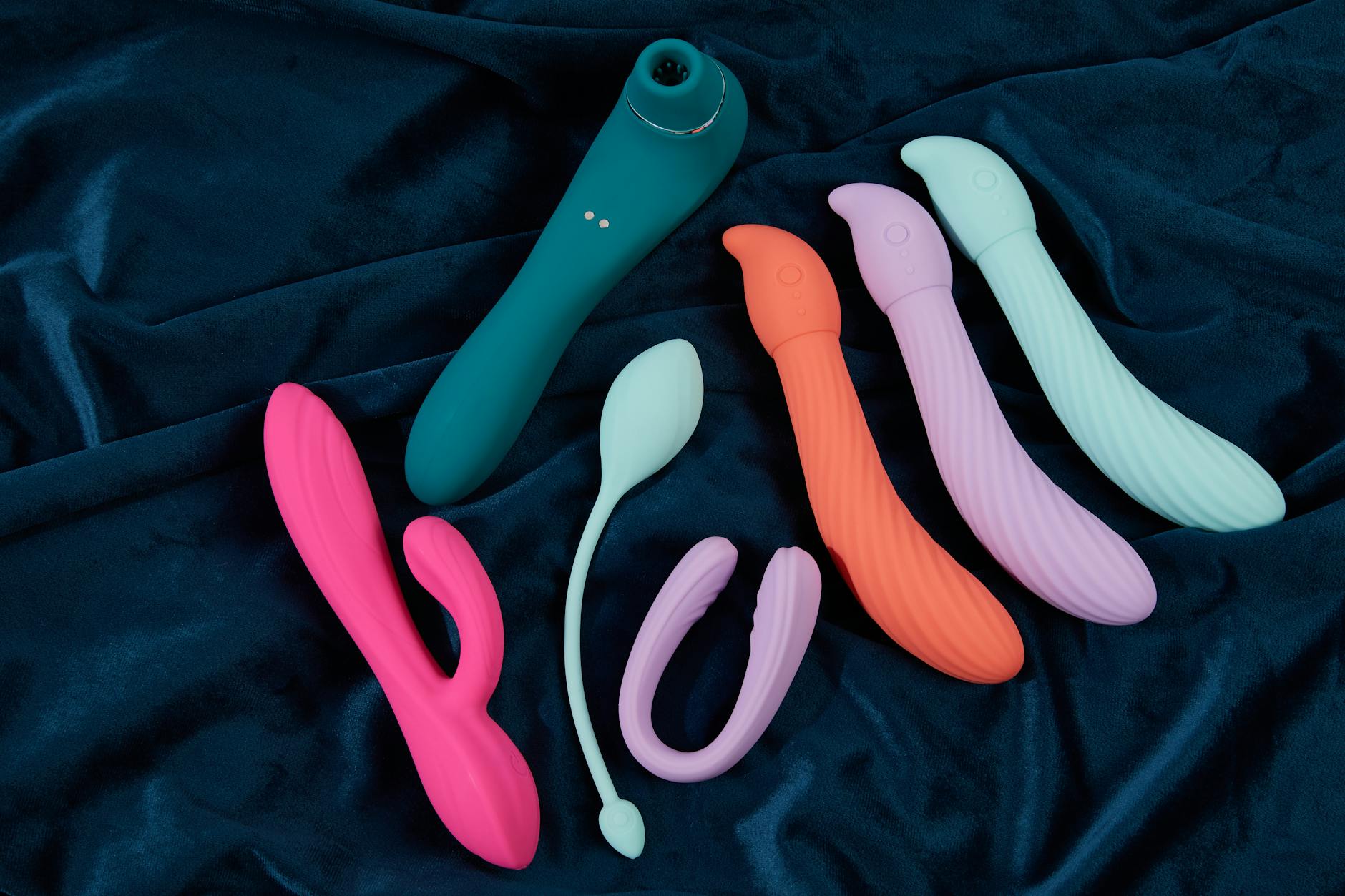
Let's talk about pleasure across your whole life
Here's what nobody tells you: the lemon vibrators that work for you at twenty-five might not be the ones you reach for at forty-five. Not because your capacity for pleasure shrinks, but because your body, your schedule, your nervous system, and what you want have all shifted. I work with couples across every decade, and I can tell you that the people who actually maintain a rich pleasure life aren't the ones who assume one approach works forever. They're the ones who pay attention.
Your lemon clitoral vibrator can be your partner through all of it, but how you use it needs to evolve. Let me walk you through what changes and what doesn't.
Late teens and early twenties: building your foundation
This is when you're figuring out what feels good without the pressure of comparison, performance, or decades of habit. Your nervous system is more reactive. Blood flow is easier. You probably orgasm faster and might experience multiple orgasms more readily.
The mistake I see most often here is going too intense too soon. Yes, you can. No, you should still start lower. A lemon vibrator at pattern 2 or 3 teaches your body precision. You're building a relationship with your own responses, not racing to the finish line.
This is also when to explore rhythm variation. Spend time with different patterns. Notice which ones create a chain reaction in your nervous system versus which ones feel flat. Your clitoris has thousands of nerve endings, and you have decades to explore them. No rush.
Practical tip: 10-15 minutes of total exploration time, not counting foreplay. Your body's still learning its own language.
Your twenties and thirties: pleasure under pressure
Work is demanding. Relationships either deepen or combust. You might be managing birth control, navigating desire with partners, or deciding whether kids are happening. Your body feels like yours and also like it's not fully yours at the same time.
Many people in this stage stop using pleasure tools altogether because it feels like one more thing. Reclaim it as non-negotiable maintenance, not a luxury. Five minutes with a lemon vibrator is better than nothing, and your nervous system needs that relief.
This is when partnership dynamics matter most. If you have a partner, this is the stage where using lemon vibrators together without awkwardness becomes genuinely important. Pleasure shared or witnessed is different from pleasure solo. Both are valid. Neither replaces the other.
Your body is responsive but busier. You might notice your clitoris is more sensitive than it was in your teens, and you might need to start lower than you expect. This is not a regression. It's your nervous system being pulled in a thousand directions.
Practical tip: Keep your lemon vibrator somewhere accessible in your bedroom. The friction of hunting it down is often enough to kill the mood.
Your forties: permission and recalibration
Something shifts here. Maybe your kids are older. Maybe you finally stopped caring what other people think. Maybe you got divorced and rediscovered what you actually like. The cultural noise quiets down, and you have space to listen to yourself again.
Your clitoris might respond differently now. It's not damaged or broken. It's just less flooded with estrogen. After hormonal changes, some women find they need more warm-up time. Others find that lower-intensity, sustained suction (which is how lemon clitoral vibrators work) becomes more satisfying than the intensity they craved at thirty.
This is peak pleasure-tool era. You have the body awareness to know what you need, the permission to ask for it, and the experience to take your time. Your orgasms don't need to be loud or fast. They can be deep and quiet and completely satisfying.
Practical tip: Extend your warm-up to 20 minutes if it helps. Pleasure that takes longer is still pleasure. Add lubrication even if you don't think you need it. Your tissues will thank you.
Your fifties and beyond: the most honest decade
Hormones shift more significantly. Your clitoris might feel less urgent to stimulate. Arousal takes longer. Some days you feel nothing. Other days a lemon vibrator can send you into an orgasm so full-bodied it surprises you.
Here's the thing: this is when most people quit. They assume it's supposed to get harder, so it does. But people who stay engaged with their pleasure during this decade report the most satisfying sex lives of their entire lives. Not because the mechanics are easier. Because the pressure is finally gone.
Your pelvic floor needs more attention now. It's lost estrogen support and can feel tight or weak. Addressing pelvic floor tension with a lemon vibrator at lower intensities helps. You're not chasing intensity. You're creating space for sensation.
If you've experienced any recovery from gynecological procedures, your approach might shift again. Patience becomes your best tool. A lemon vibrator at pattern 1, used gently and briefly, can help you reconnect with sensation during healing.
Many people ask whether this is the right time to switch from traditional vibrators to a lemon sucker. The answer is yes, if it feels right. Lemon vibrators use suction rather than direct vibration, which often feels gentler and more nuanced on thinner tissue.
Practical tip: Lubrication becomes essential, not optional. Water-based lube changes everything. Invest in good quality. Your pleasure is worth it.
What stays constant across every stage
Three things don't change:
1. Your clitoris still works. It doesn't get weaker with age. The nerve pathways don't disappear. Your capacity for sensation and orgasm is still there, even if the path looks different now.
2. Warm-up matters more as you age. Twenty-year-old you could probably orgasm in five minutes. Forty-five-year-old you needs 15-20. This isn't failure. It's how nervous systems work. The deeper the relaxation, the more pleasure is available.
3. Your brain is always your biggest sex organ. Physical changes matter. But they matter less than what's happening in your head. If you're distracted, resentful, or disconnected from your body, no lemon vibrator will fix that. If you're present and willing, everything else works.
The transition moments that need special attention
Certain life events deserve extra care when you're using pleasure tools. Pregnancy changes everything about sensation and comfort. Postpartum recovery is real and demands patience. Perimenopause is a hormonal roller coaster that can make one month feel like your baseline and the next month feel like you're in a different body.
After major life transitions, give yourself permission to restart. You haven't lost progress. You're adapting to new information about your body. A lemon vibrator at pattern 1 is not failure. It's wisdom.
When intensity matters less than consistency
I talk to so many people who assume they're losing sensitivity as they age. Sometimes they are. More often, they've just stopped using their tools regularly and think that's what aging looks like.
Consistency matters more than intensity across every stage. Ten minutes once a week, maintained, is better than two-hour sessions once a month. Your nervous system learns. Your body remembers what pleasure feels like. Regular engagement, even quiet engagement, maintains your capacity.
This is also why the question of how often to use lemon vibrators doesn't have a one-size-answer. For someone in their twenties, daily use is fine. For someone in their sixties rebuilding after years of avoidance, three times a week might be the breakthrough.
The role of vulnerability in each decade
Your relationship with your own body changes with age, and that affects how you relate to pleasure tools. At twenty, using a lemon clitoral vibrator might feel exciting or nervous. At forty, it can feel like self-respect. At sixty, it can feel like defiance.
All of those relationships are healthy. The key is noticing which one you're in and honoring it rather than forcing yourself into someone else's story.
If you're with a partner, your vulnerability needs to shift too. What felt vulnerable to share at twenty-five feels different at forty-five. You have more credibility with your own desire. Use that.
FAQ: Using lemon vibrators across your lifespan
Can I use the same intensity settings throughout my life?
Unlikely. Most people start lower as they age, though some find new intensity preferences at different stages. The best approach is to revisit your baseline every few years. What felt right at thirty might overstimulate at fifty. Experiment without judgment.
Do lemon vibrators work for people going through perimenopause?
Absolutely. Perimenopause is erratic, so your needs change week to week. Sometimes you want lower intensity. Sometimes you want sustained suction. A lemon vibrator's variable patterns handle both. The key is patience with yourself during that decade.
Is it normal for orgasms to change shape as I age?
Completely normal. At twenty, an orgasm might be sharp and quick. At fifty, it might be slow and deep and last longer. At sixty, it might be subtle but profound. None of these are better or worse. They're just different expressions of your nervous system at different life stages.
Should I tell a new partner about my lemon vibrator use?
That depends on your relationship and communication style. But generally, yes. Honesty about what you need and what brings you pleasure is foundational to adult partnership. If a partner shames your pleasure tools, that's information about their emotional maturity, not about you.
What if I've taken a long break from using pleasure tools?
Start over. Your body will remember faster than you think, but your nervous system needs permission to relax. Begin at pattern 1. Spend more time warming up. Use plenty of lubrication. You're not starting from zero. You're reintroducing yourself to sensation you already know.
Do I need different lemon vibrators for different life stages?
Not necessarily. A quality lemon clitoral vibrator with variable intensity handles most life stages. But if you find your preferences shifting significantly (lower intensity, more sustained patterns, different angles), exploring options makes sense. Your pleasure toolkit can evolve just like you do.
The bottom line
Your body is going to change. That's not a problem to solve. It's information to work with. The people I know with the richest pleasure lives at sixty aren't the ones who pretended their bodies stayed the same. They're the ones who paid attention, adapted, and stayed curious. A lemon vibrator is just a tool. But it's a tool that grows with you if you let it. Your pleasure matters at every age. Not eventually. Now.